Age of Mythology Retold : Demeter God Pack
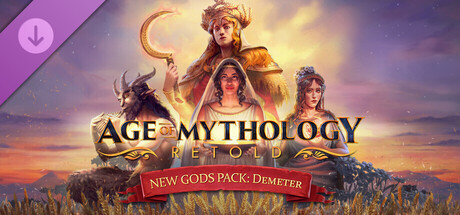
The new expansion for Age of Mythology: Retold called the Demeter God Pack is one of the most mythology-focused additions the series has ever received. Released in 2026, the expansion adds Demeter as a brand-new major Greek deity alongside new mythological units, god powers, and a story campaign inspired directly by ancient Greek legends.
Since the original Age of Mythology launched in 2002, many fans wondered why Demeter was absent from the playable Greek gods. Zeus, Poseidon, and Hades had always represented the Greek civilization, but Demeter — one of the most important Olympian gods in ancient Greece — was missing. The Retold expansion finally corrects this by making her the fourth major Greek deity.
What makes the DLC especially interesting is how deeply it embraces Greek mythology. The gameplay mechanics themselves are inspired by ancient myths about agriculture, famine, the Underworld, nature spirits, and the cycle of life and death. Rather than simply adding new units, the expansion uses mythology as the foundation for its design.
Who Was Demeter in Greek Mythology?
Demeter was the Greek goddess of agriculture, grain, fertility, harvests, and sacred law. She was one of the Twelve Olympians and the daughter of Cronus and Rhea, making her the sister of Zeus, Poseidon, Hades, Hera, and Hestia.
In ancient Greece, Demeter was considered essential to human civilization because agriculture allowed cities and societies to survive. Grain was viewed as a divine gift from Demeter, and many Greek communities worshipped her as the protector of crops and food supplies.
Unlike gods such as Ares or Poseidon, Demeter was not mainly associated with war or destruction. Instead, she represented the natural cycles of growth, nourishment, and renewal. However, Greek mythology also showed that her grief and anger could become catastrophic, especially in the famous story involving her daughter Persephone.
The Demeter God Pack uses these themes as the core identity of the faction. Her powers revolve around nature, resources, and environmental control rather than direct military aggression.
The Myth of Persephone and the Seasons
The most important myth connected to Demeter is the story of Persephone and Hades. This myth is one of the central stories of ancient Greek religion and serves as the emotional foundation for much of the DLC.
According to the legend, Persephone — Demeter’s daughter — was abducted by Hades and taken into the Underworld to become his queen. Demeter was devastated by the loss and wandered across the world searching for her child. During this period of grief, she neglected her duties as goddess of agriculture.
As a result, crops stopped growing, the earth became barren, and humanity faced starvation. Zeus eventually intervened because the world itself was beginning to collapse.
A compromise was reached: Persephone would spend part of the year with Demeter and part of the year in the Underworld with Hades. Because Persephone had eaten pomegranate seeds in the realm of the dead, she was forever tied to the Underworld.
The Greeks used this myth to explain the changing of the seasons. Spring and summer represented Persephone’s return to her mother, while autumn and winter symbolized her descent back into the Underworld.
The game reflects this mythology through Demeter’s god powers and environmental mechanics. Her abilities can weaken nature itself, creating famine-like conditions across the battlefield.
Demeter’s Gameplay and God Powers
Demeter’s gameplay style reflects her mythological identity extremely well. Instead of relying purely on brute force, her civilization focuses on controlling the land and manipulating resources.
One of her major powers, “Wither,” destroys farms, forests, and berry bushes. This ability is directly inspired by the myth in which Demeter causes the world’s harvests to fail after Persephone disappears.
This mechanic is important because it transforms mythology into gameplay. The battlefield itself becomes part of the story. Nature can either flourish or decay depending on divine influence.
Demeter’s faction also emphasizes growth and renewal. Her economic strengths mirror her role as goddess of agriculture, while her destructive powers show the terrifying consequences of famine and divine grief.
This makes her very different from the original Greek gods in Age of Mythology. Zeus focused on divine authority and lightning, Poseidon emphasized the sea and earthquakes, and Hades represented death and defense. Demeter instead embodies natural cycles: life and death, abundance and scarcity, rebirth and decay.
Pan and the Wild Side of Greek Nature
One of the new minor gods in the expansion is Pan, the rustic god of wilderness, shepherds, forests, and music.
In Greek mythology, Pan was often depicted as half man and half goat. His appearance later influenced medieval depictions of satyrs and even the Devil in European art. Pan represented untamed nature and primal instinct rather than civilized society.
The word “panic” actually comes from Pan because myths claimed his terrifying cries could spread fear across entire armies.
The game embraces this wild identity. Pan’s god power creates an “Arcadian Meadow,” a peaceful natural zone where conflict temporarily stops. This references Arcadia, the idyllic countryside strongly associated with Pan in Greek literature.
Pan’s mythological units also reflect themes of deception and wilderness. Creatures tied to him can disguise themselves or ambush enemies unexpectedly, emphasizing the unpredictable dangers of nature.
His inclusion adds a more chaotic and untamed dimension to Demeter’s nature-based faction.
Hestia and the Sacred Hearth
Another important addition is Hestia, goddess of the hearth, home, family, and sacred fire.
Hestia is one of the oldest Olympian deities but is often overlooked in modern media because she rarely appeared in dramatic myths or wars. Yet in ancient Greece she was one of the most respected gods.
Every Greek household maintained a hearth fire dedicated to Hestia. Cities also possessed sacred communal flames representing unity and civilization itself.
The Demeter expansion portrays Hestia as a defensive and supportive deity. Her powers strengthen settlements, improve resources, and protect communities.
This fits perfectly with Greek religion because the hearth symbolized safety, stability, and continuity. While gods like Ares represented the chaos of battle, Hestia represented peace within the home.
Her inclusion in the DLC helps show a side of Greek mythology that many games ignore: domestic religion and everyday sacred life.
Persephone and the Underworld
Persephone is perhaps the most important mythological figure in the expansion besides Demeter herself.
Originally the innocent daughter of Demeter, Persephone became Queen of the Underworld after her abduction by Hades. This dual identity made her one of the most fascinating figures in Greek mythology because she represented both life and death simultaneously.
The game focuses heavily on her Underworld role. Her powers allow dead warriors to rise again as ghostly spirits called Eidolons.
This directly reflects Greek beliefs about the dead existing as shades or spirits within Hades.
Persephone’s faction also includes Sirens, mythical creatures famous for luring sailors to destruction with enchanting songs. These beings were among the most feared supernatural monsters in Greek mythology because they represented temptation and doom.
By including Persephone, the expansion connects Demeter’s agricultural mythology with the darker themes of death and rebirth.
Mythological Creatures in the DLC
The Demeter God Pack introduces several famous creatures from Greek mythology.
One major example is the Harpy. In ancient myths, Harpies were winged spirits associated with storms, punishment, and divine vengeance. They often carried people away or tormented wrongdoers.
The game adapts them into fast aerial attackers capable of lifting enemies into the sky before dropping them. This ability captures their terrifying supernatural nature perfectly.
Another creature is the Hamadryad, a tree nymph whose life was magically connected to a specific tree. If the tree died, the spirit died as well.
In the expansion, Hamadryads can disguise themselves as trees, turning their mythological connection to forests into a clever gameplay mechanic.
The DLC’s creatures are particularly effective because they are not random monsters. Each one is closely tied to the themes of nature, spirits, or the Underworld.
Orpheus, Chiron, and the Underworld Story
The expansion also includes a new scenario called “Silent Sanctuary,” which follows Orpheus and Chiron on a journey into the Underworld.
Orpheus is one of the most famous heroes in Greek mythology because of his tragic attempt to rescue Eurydice from the realm of the dead through the power of music.
Chiron was the wise centaur mentor who trained legendary heroes such as Achilles, Jason, and Asclepius. Unlike most centaurs, who were portrayed as violent and savage, Chiron represented wisdom and knowledge.
Pairing Orpheus and Chiron together creates a classic Greek mythological adventure involving the Underworld, divine relics, and supernatural dangers.
The story captures the tone of ancient Greek epics in which heroes descended into Hades to gain wisdom or recover sacred objects.
Why the Demeter Expansion Works So Well
What makes the Demeter God Pack stand out is how faithfully it captures the spirit of Greek mythology.
Ancient myths were never just stories about monsters or battles. They explained natural phenomena, explored human emotions, and reflected fears about mortality, famine, and loss.
The expansion understands this deeply. Demeter is not simply “the farming goddess.” She represents the balance between life and death, growth and decay, civilization and survival.
The gameplay mechanics reinforce these themes constantly. Forests wither, spirits rise from the dead, nature interrupts warfare, and sacred hearths protect communities.
Rather than using mythology as decoration, the game integrates mythology directly into how the player experiences the battlefield.
Demeter God Pack
The Age of Mythology: Retold Demeter God Pack is much more than a standard strategy game expansion. It is a celebration of Greek mythology and one of the most thoughtful interpretations of Demeter ever seen in gaming.
By focusing on myths surrounding Persephone, the Underworld, famine, sacred nature, and rebirth, the expansion explores themes that were central to ancient Greek religion for thousands of years.
The addition of gods like Pan, Hestia, and Persephone helps broaden the representation of Greek mythology beyond the usual focus on Zeus or warfare. At the same time, the mythological creatures and story campaign bring famous legends to life in interactive form.
For fans of Greek mythology, the expansion succeeds because it captures both the grandeur and emotional depth of the ancient stories. It transforms myths about gods, seasons, death, and nature into living gameplay systems, allowing players to experience Greek mythology in a dynamic and immersive way. For more, visit the official site of the game.
Discover more from Hellenic Moon
Subscribe to get the latest posts sent to your email.