The Phantom of the Opera by Alexandre Castagnetti in cinemas soon!
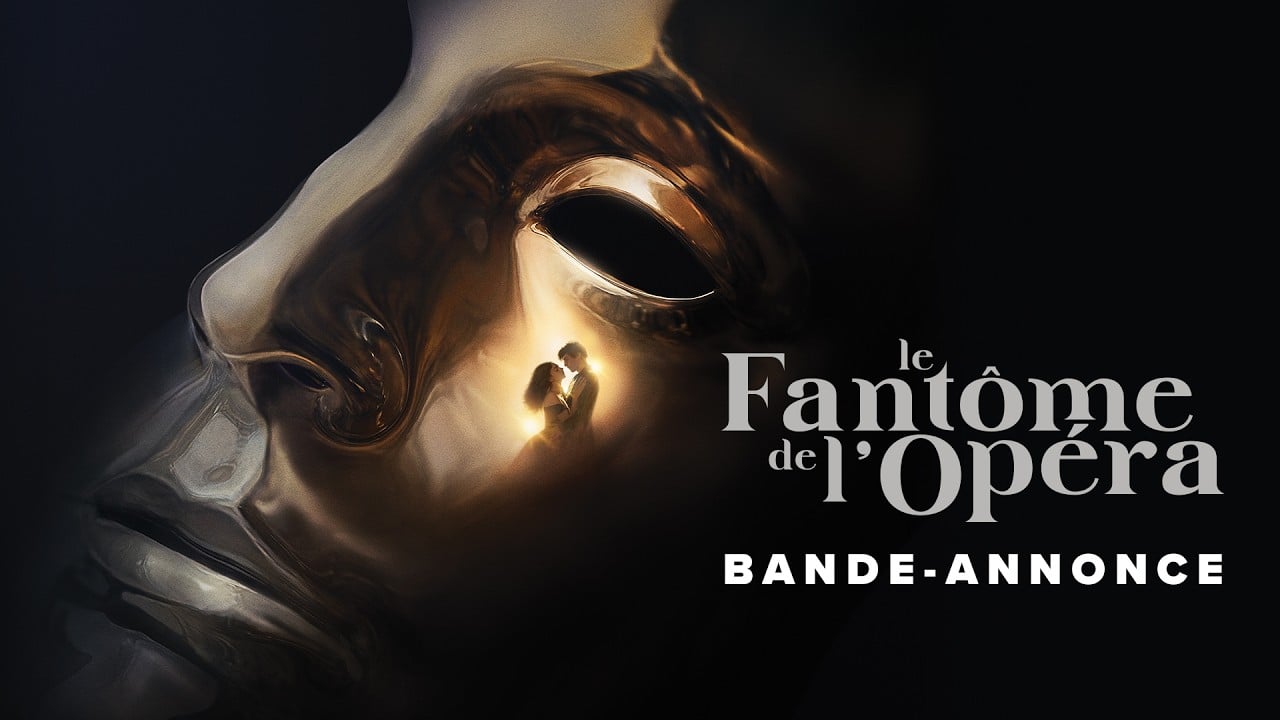
The Phantom of the Opera, directed by Alexandre Castagnetti, offers a contemporary interpretation of one of France’s most enduring Gothic stories. Opening in French cinemas on Oct. 28, and known in French as Le Fantôme de l’Opéra, the 2026 film returns to the mysterious world of the Paris Opera, combining romance, supernatural suspense, dance and the unsettling atmosphere of the historic Palais Garnier.
One of the most intriguing aspects of the film is its connection to Greek mythology, particularly the stories of Hades and Persephone and Orpheus and Eurydice. Hades kidnapped Persephone to live with him underground, and the legendary musician Orpheus descended into the Underworld to recover his beloved Eurydice, persuading Hades and Persephone, the rulers of the dead, to give her another chance at life. His tragic journey has inspired countless works of literature, music and theatre, making it a natural mythological reference for a story about a mysterious musician, forbidden love and a cursed opera.
The film stars Deva Cassel, Julien de Saint-Jean and Romain Duris. Its story centres on Anastasia, a young dancer who joins the prestigious Opéra Garnier and begins rehearsing Orpheus, a supposedly cursed opera attributed to the Phantom. When she falls for a mysterious pianist, unexplained accidents and disturbing revelations threaten the production.
Although the precise extent of the film’s mythological references remains to be seen, its use of Orpheus creates an opportunity to explore the connections between the Phantom’s mysterious world and the Greek myths of Hades and Persephone.
A New Interpretation of a Gothic Classic
The original The Phantom of the Opera, written by Gaston Leroux and published in 1910, tells the story of a mysterious figure living beneath the Paris Opera House. A musical genius who hides from society, the Phantom exerts a powerful influence over the theatre and becomes obsessed with the young singer Christine Daaé.
Leroux’s novel combines Gothic horror, detective fiction, romance and tragedy. Its central character is both frightening and sympathetic: his extraordinary musical abilities contrast with his isolation and desperate desire for affection.
The story has inspired numerous adaptations, including the 1925 silent film starring Lon Chaney and Andrew Lloyd Webber’s hugely successful musical, which premiered in London’s West End in 1986. Each interpretation explores the relationship between beauty and monstrosity, the power of artistic expression and the dangers of obsessive love.
Castagnetti’s film introduces a new perspective by placing a young dancer at the centre of its story. Anastasia enters the competitive world of professional dance, where ambition and artistic perfection coexist with uncertainty and danger. The mysterious pianist and the cursed opera introduce an element of supernatural suspense.
The choice of Orpheus as the opera within the film is especially significant. In Greek mythology, Orpheus was the musician whose talent allowed him to enter the kingdom of the dead. By incorporating this ancient story into a modern Gothic narrative, the film establishes a potential connection between the Phantom’s hidden existence and the mythological Underworld.
The opera therefore has the potential to function as more than a performance. Its themes of love, loss and the boundary between life and death provide a framework for understanding the characters’ experiences.
Hades and Persephone: The Rulers of the Underworld
Hades and Persephone are essential to understanding the myth of Orpheus and Eurydice. They govern the realm that Orpheus must enter to recover his beloved, and their decision determines whether she can return to the living world.
Hades was one of the principal gods of the Greek pantheon. A son of Cronus and Rhea, he was the brother of Zeus and Poseidon. Following the defeat of the Titans, the three brothers divided the cosmos: Zeus ruled the heavens, Poseidon the sea, and Hades the Underworld.
Modern popular culture often portrays Hades as a villain, but Greek mythology presents a more complex figure. He is primarily the ruler of the dead, responsible for maintaining the boundaries between mortal existence and the afterlife.
His wife, Persephone, is the daughter of Demeter, goddess of agriculture and fertility. In the familiar myth, Hades carries Persephone away to his kingdom while she is gathering flowers. Her mother searches desperately for her, and the earth becomes barren during her absence.
Eventually, a compromise is reached: Persephone spends part of the year in the Underworld and part with her mother. Her periodic return to the living world becomes associated with the renewal of vegetation and the arrival of spring.
The myth is not simply a romance. It explores power, separation, motherhood, fertility and the transition between different stages of existence. Modern interpretations also place particular emphasis on Persephone’s agency and the violence involved in her abduction.
Hades as a symbol of the Phantom
The Phantom can be compared symbolically to Hades because both are associated with hidden worlds and separation from ordinary society.
The Phantom inhabits the secret spaces beneath the opera house, exerting influence over a place that other people believe they understand. His knowledge of its concealed passages and hidden mechanisms gives him an almost supernatural presence.
Hades similarly rules a kingdom that living mortals cannot freely enter and leave. Both figures are connected to boundaries separating ordinary existence from a more mysterious realm.
However, there is an important difference. Hades is a god fulfilling a cosmic role, while the Phantom is a Gothic figure whose isolation and desire for affection are central to his character. The Phantom’s tragedy emerges not simply from his control over a hidden world, but from his inability to escape the loneliness that defines his existence.
The kidnapping of Persephone by Hades echoes the kidnapping of the singer of the opera by the Phantom.
Orpheus and Eurydice
Orpheus was one of the most celebrated musicians in Greek mythology. Often described as the son of Apollo, god of music and prophecy, and Calliope, Muse of epic poetry, he possessed extraordinary artistic abilities. His music could charm animals, move trees and rocks, and influence even supernatural beings.
Orpheus fell in love with Eurydice, a beautiful nymph. Their happiness was short-lived, however, when Eurydice died after being bitten by a snake in the familiar version of the story. Overwhelmed by grief, Orpheus refused to accept that death had permanently separated them.
He decided to descend into the Underworld and persuade its rulers to release his beloved. Using his lyre and his extraordinary musical talent, he moved through the kingdom of the dead, enchanting its inhabitants with his sorrowful music.
Eventually, Orpheus reached Hades and Persephone, the divine rulers of the Underworld. His performance moved them, and they agreed to allow Eurydice to return to the living world on one condition: Orpheus must walk ahead of her and not look back until they had both reached the surface.
Orpheus accepted the condition and began the journey towards the light. Yet, as they approached the exit, doubt overcame him. He turned around to make sure Eurydice was following, and she immediately disappeared back into the Underworld.
His attempt to overcome death had failed. Despite his extraordinary music and the gods’ willingness to grant him a second chance, he could not resist the urge to look back.
The story appears in influential literary works, including Book X of Ovid’s Metamorphoses and Virgil’s Georgics. Although these are Roman accounts of a Greek myth, they helped establish Orpheus and Eurydice as enduring figures in European literature, opera and art.
Why Orpheus is relevant to the Phantom
Orpheus and the Phantom share a fundamental characteristic: both are associated with music that seems to possess extraordinary power. Yet neither artistic genius nor emotional intensity guarantees happiness.
Orpheus can move the rulers of the dead, but he cannot overcome his own uncertainty. The Phantom, in the traditional story, possesses remarkable musical abilities but struggles to find love and acceptance.
Both figures illustrate the difference between artistic power and emotional fulfilment. Music can inspire, persuade and transform, but it cannot compel another person to love someone.
The cursed opera in Castagnetti’s film creates a particularly interesting connection. Anastasia rehearses Orpheus while becoming involved in a mysterious romance. The ancient myth may therefore reflect or foreshadow the emotional conflicts unfolding around her.
Although the film should not automatically be treated as a direct retelling of the myth, its choice of Orpheus establishes a meaningful connection with the themes of forbidden love, loss and the supernatural.
Persephone and Anastasia: Entering another world
Persephone’s story offers a different perspective on Anastasia’s journey.
Persephone crosses from the living world into the Underworld, where she must confront a new existence governed by unfamiliar rules. Anastasia similarly enters a world of artistic ambition and supernatural mystery when she joins the Opéra Garnier and begins rehearsing the cursed opera.
The comparison is not exact. Persephone becomes queen of the Underworld, while Anastasia is a young dancer whose experiences remain tied to the modern theatrical setting. Nevertheless, both stories involve a transition into a world that changes the protagonist’s circumstances and relationships.
The opera house can be understood as a symbolic Underworld. Its grand public spaces represent beauty, prestige and artistic achievement, while its concealed passages and the Phantom’s mysterious presence suggest a darker reality beneath the surface.
Persephone’s myth adds another dimension to this interpretation: crossing into an unfamiliar world can bring transformation, but it can also involve separation, danger and a loss of control.
Music, Dance and the Supernatural Power of Art
Greek mythology frequently associates artistic expression with divine inspiration. Music and poetry were linked to Apollo and the Muses, whose influence represented the extraordinary power of creativity.
Orpheus embodies this idea. His music does not merely entertain listeners; it changes the behaviour of animals, human beings and supernatural forces. His ability to influence Hades and Persephone demonstrates that art can reach places inaccessible to ordinary human persuasion.
The Phantom similarly represents the mysterious power of music. His identity is inseparable from his talent, and his influence over the opera house is closely connected to his artistic abilities.
Castagnetti’s emphasis on dance adds a visual dimension to these themes. Dance communicates emotion through physical movement, making it particularly effective for expressing longing, vulnerability and conflict without relying entirely on dialogue.
The mysterious pianist and Anastasia’s developing romance also keep music at the centre of the film’s emotional atmosphere.
The production of Orpheus may consequently become a reflection of the characters’ own experiences. The performers are recreating a myth about love and death while confronting uncertainty in their personal lives.
This relationship between performance and reality is particularly suited to a Gothic story. The theatre creates illusions for its audience, but the cursed production introduces the possibility that something genuinely disturbing exists behind the performance.
The result is a connection between ancient mythology and the modern world of artistic ambition, where beauty and danger can coexist.
Forbidden Love, Obsession and the Price of Desire
The stories of Orpheus and Eurydice, Hades and Persephone, and the Phantom of the Opera all explore the consequences of desire.
Orpheus’s love for Eurydice is sincere, but his attempt to recover her ultimately fails because he cannot overcome his fear. His tragedy suggests that love cannot always defeat the boundaries imposed by death and fate.
The Phantom’s story explores a more troubling form of longing. In Leroux’s novel and many adaptations, his desire for Christine becomes entangled with manipulation and possessiveness. He wants to be loved but struggles to accept that affection cannot be demanded, regardless of his talent or suffering.
The myth of Hades and Persephone introduces questions about power and consent. Hades’s abduction of Persephone complicates any straightforward interpretation of their relationship as a romantic love story. Her eventual position as queen of the Underworld does not erase the violence at the beginning of the myth.
These distinctions matter when comparing the ancient stories with the Phantom’s relationship with Anastasia. The film’s premise establishes an impossible romance, unexplained accidents and troubling revelations, but it does not reveal enough to determine exactly how the relationship develops.
Nevertheless, the mythological parallels invite audiences to consider an important question: when does intense desire become a form of control?
The Greek myths demonstrate that love can inspire extraordinary courage, but it can also lead to suffering when individuals attempt to overcome boundaries or determine another person’s fate.
The Underworld as a Metaphor for Isolation and Transformation
In Greek mythology, journeys into the Underworld often represent encounters with grief, mortality and the limits of human knowledge. Orpheus descends because he cannot accept his loss, while other legendary heroes enter the realm of the dead to seek knowledge, fulfil a task or confront supernatural forces.
The Phantom’s hidden world can be interpreted in a similar way. Its darkness is not simply physical. It also represents emotional isolation, concealed suffering and the difficulty of escaping the past.
For the Phantom, the opera house may be both refuge and prison. It gives him a place to exercise his extraordinary talents, but his separation from society prevents him from developing ordinary relationships.
Anastasia’s arrival potentially disrupts this closed world. Her presence introduces the possibility of connection, but it may also threaten the Phantom’s isolation and the mysterious order he has established.
Persephone’s myth adds another layer to this interpretation. Her movement between the upper world and the Underworld represents a transition between different forms of existence. Her story is associated with seasonal renewal, but also with the pain of separation.
Anastasia’s entry into professional dance can likewise be interpreted as a transition into a new stage of life. Her encounter with the Phantom introduces an unfamiliar dimension to that journey, in which ambition, romance and danger become difficult to separate.
These parallels offer a way of understanding the film’s Gothic atmosphere without assuming that its characters literally represent Greek gods or mythological heroes.
The Phantom of the Opera: An Ancient Greek Tragedy Beneath the Paris Opera House
Alexandre Castagnetti’s The Phantom of the Opera brings a classic Gothic story into a contemporary setting, while its use of the cursed opera Orpheus establishes a compelling connection to Greek mythology.
The story of Orpheus and Eurydice provides the most direct parallel. Both narratives explore the power of music, the anguish of separation and the desire to overcome boundaries that appear impossible to cross. Orpheus’s encounter with Hades and Persephone also introduces the possibility that love and artistic expression might persuade even the rulers of death to reconsider their decisions.
The myths of Hades and Persephone deepen this interpretation. Hades provides a symbolic parallel for the Phantom’s hidden world, while Persephone’s journey between two realms offers a way to understand Anastasia’s entrance into an unfamiliar and potentially dangerous environment.
These connections are particularly interesting because they do not require the film to reproduce the ancient myths literally. Instead, the stories provide a framework for interpreting its characters and themes.
Orpheus represents the artist who hopes to overcome loss through music. Hades embodies the authority of a world separated from ordinary life. Persephone represents transformation and the complicated experience of crossing between different worlds. The Phantom brings together artistic brilliance, loneliness and a desperate desire for affection.
Ultimately, the strongest connection between the film and Greek mythology lies in a timeless question: Can love and art overcome the forces that separate us from the people we desire?
Orpheus’s tragedy suggests that even the most beautiful music cannot guarantee a happy ending. The Phantom’s story similarly reminds us that artistic genius cannot replace mutual affection or overcome the consequences of obsession.
Beneath the glamour of the Paris Opera House, these ancient themes find a new expression: the darkness that accompanies desire, the mystery of the human heart and the enduring hope that even the most isolated souls might find their way back into the light.
Visit the website of the movie for more.
Discover more from Hellenic Moon
Subscribe to get the latest posts sent to your email.