Sophie’s World by Jostein Gaarder: Greek Mythology and Philosophy
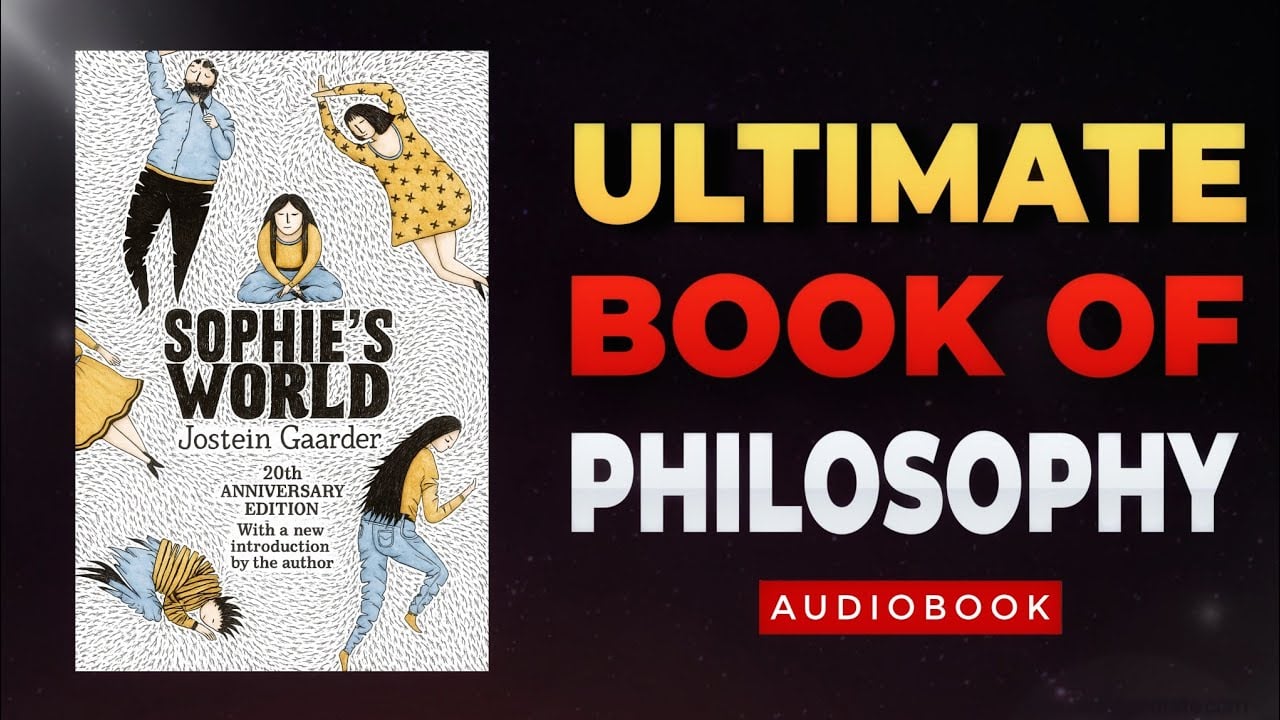
Jostein Gaarder’s Sophie’s World, first published in Norway in 1991, is both a coming-of-age novel and an introduction to the history of Western philosophy. Its central character, Sophie Amundsen, is a teenage girl whose ordinary life changes when she begins receiving mysterious letters containing two fundamental questions: “Who are you?” and “Where does the world come from?” These apparently simple questions introduce Sophie to a journey through thousands of years of philosophical thought.
Under the guidance of the mysterious philosopher Alberto Knox, Sophie encounters thinkers from ancient Greece through to the modern era. She learns about the great philosophical debates concerning reality, knowledge, morality, freedom and existence. However, ancient Greece is particularly important to the novel because it represents the beginning of the Western philosophical tradition. Before the Greeks developed philosophy as a systematic search for rational explanations, people used mythology to make sense of the world.
Gaarder uses this transition from Greek mythology to philosophy as one of the central themes of Sophie’s World. The book explores how human beings moved from explaining the universe through stories about gods and heroes to asking whether nature and existence could be understood through reason.
Greek Mythology: Humanity’s First Explanations
Greek mythology represents one of humanity’s earliest attempts to understand the world. Ancient people lived surrounded by mysteries that they could not explain scientifically. Thunder, lightning, earthquakes, storms, the changing seasons, birth and death all demanded explanations. Greek mythology provided answers by connecting these events to the actions of gods and supernatural forces.
Zeus, for example, was associated with thunder and lightning, while Poseidon was connected with the sea and earthquakes. Demeter and Persephone provided a mythological explanation for the changing seasons, while stories of Hades and the underworld explored the mystery of death.
The importance of these myths in Sophie’s World is that they are not treated simply as childish stories. Gaarder recognizes that mythology served an important intellectual purpose. Human beings wanted to understand their surroundings, and mythology gave mysterious events a narrative structure. Instead of seeing an unexplained storm as a random event, people could understand it as part of a story involving divine personalities.
Greek myths also explored human questions. Stories about heroes, gods and monsters addressed love, jealousy, pride, revenge, suffering, ambition and death. The gods themselves frequently behaved like human beings, making the myths reflections of human nature as well as explanations of nature.
For Sophie, discovering mythology demonstrates that people have always asked fundamental questions about existence. The language of the questions changes, but the curiosity remains.
From Mythos to Logos
One of the most important ideas in the Greek section of Sophie’s World is the movement from mythos to logos. Mythos represents traditional stories used to explain the world, while logos refers to rational thought, argument and explanation.
Around the sixth century BCE, Greek thinkers began asking whether nature could be understood without relying entirely on stories about the gods. Instead of asking which god was responsible for a natural event, they began asking what the universe was made of and what principles governed it.
The early natural philosophers were interested in the fundamental nature of reality. Thales proposed water as the basic substance of the universe, while Anaximander suggested the indefinite or boundless apeiron. Heraclitus emphasized constant change, while Parmenides argued that genuine change could not occur in the way our senses suggested.
The significance of these philosophers is not that they necessarily discovered scientifically correct answers. Their importance lies in the questions they asked and the method they used. They attempted to explain nature through principles that could be discussed and challenged rather than through traditional stories alone.
This was a revolutionary development. The universe was increasingly being treated as something that could be investigated rather than simply accepted as a mystery explained by mythology.
Democritus and the Nature of Matter
Democritus provides one of the most fascinating examples of this new philosophical approach. He proposed that everything was composed of extremely small, indivisible particles called atoms moving through empty space.
Although Democritus’s theory was very different from modern atomic science, the basic idea was remarkable for its time. He was attempting to explain the enormous variety of the physical world through fundamental material components.
His philosophy illustrates the growing difference between mythology and philosophical reasoning. Rather than explaining the world through the actions of gods, Democritus searched for an underlying physical structure.
This is an important theme throughout Gaarder’s novel. Philosophy does not necessarily provide immediate answers. Instead, it teaches people to search for explanations, challenge assumptions and consider alternative possibilities.
Socrates and the Examination of Life
With Socrates, Greek philosophy moves from questions about the physical universe toward questions about human beings and how they should live. Socrates was less interested in identifying the substance from which the universe was made and more concerned with concepts such as justice, virtue, knowledge and morality.
His importance to Sophie’s World is especially clear because his method was based on questioning. Rather than simply telling people what to believe, Socrates challenged them to examine their own assumptions.
This is exactly what happens to Sophie. The questions that begin her philosophical education force her to reconsider things she has always taken for granted. “Who are you?” is not simply a question about her name or biography. It becomes a question about identity itself. What makes somebody the person they are?
Socrates therefore becomes a model for Sophie’s own intellectual development. She learns that admitting that you do not know something can be the beginning of wisdom. Philosophy is not necessarily about possessing a collection of answers; it is about having the courage to ask difficult questions.
Athens and the Search for Truth
Athens provides another important setting for the development of Greek philosophy. The city became associated with political debate, democracy, rhetoric and intellectual disagreement. Citizens were expected to participate in public life, creating an environment in which the ability to argue and persuade became increasingly important.
This produced a tension between persuasion and truth. The Sophists became famous for teaching rhetoric and argument, while Socrates challenged the idea that winning an argument was the same as discovering truth.
This debate remains remarkably relevant. Modern society is also filled with competing arguments, political claims, advertising and attempts to persuade people. Gaarder’s presentation of ancient Athens therefore has implications beyond the ancient world.
Sophie learns that philosophy requires more than accepting the most convincing argument. A claim must be examined, questioned and tested.
Plato and the Question of Reality
Plato introduces Sophie to one of the deepest philosophical questions in the novel: what is reality?
Plato’s theory of Forms suggests that the physical world we experience is constantly changing, while the underlying Forms represent eternal and unchanging realities. Individual beautiful things may disappear, but the concept of Beauty remains. Individual acts may be just or unjust, but Plato asks whether there is an ideal form of Justice beyond them.
This distinction between appearance and reality becomes particularly important in Sophie’s World. Sophie is gradually learning that the world she takes for granted may not be as simple as it appears.
Plato’s Allegory of the Cave provides an especially powerful image for this idea. Plato describes people who have spent their lives watching shadows on a cave wall and believing those shadows are reality. The philosopher gradually leaves the cave and discovers a much larger world.
Sophie’s philosophical education can be understood in similar terms. Alberto encourages her to turn away from the familiar and examine the assumptions beneath it. She begins to realize that what appears obvious may conceal much deeper questions.
The Platonic distinction between appearance and reality also becomes increasingly significant as the novel’s mystery develops. Without revealing its major twists, Gaarder deliberately encourages the reader to question what is real and what is merely an appearance.
Aristotle and the World We Can Observe
Aristotle, Plato’s student, provides a contrasting approach. He rejected the idea that the essential nature of things existed in a separate realm of Forms and instead concentrated on the observable world.
Aristotle studied animals, plants, politics, ethics and logic. He wanted to understand how things worked and developed systematic methods for organizing knowledge. In this respect, he represents an important step toward scientific investigation.
The contrast between Plato and Aristotle gives Sophie two different approaches to reality. Plato encourages her to look beyond the physical world for deeper principles, while Aristotle teaches her to study the physical world carefully.
Their disagreement also demonstrates that philosophy develops through debate. Aristotle does not simply accept everything his teacher believes. He takes Plato’s ideas seriously but challenges them and develops his own conclusions.
This pattern of questioning and disagreement becomes one of the most important lessons of Sophie’s philosophical education.
Greek Mythology, Fate and Free Will
The Greek concept of fate provides another connection between mythology and philosophy. Greek myths frequently portray human beings as struggling against forces that appear to be predetermined. The stories raise the question of whether people genuinely control their own lives.
The myth of Oedipus is a particularly powerful example. Oedipus attempts to escape a terrible prophecy, but his attempts to avoid his destiny ultimately contribute to its fulfillment. The story creates a paradox: if everything has already been determined, how much freedom can an individual possess?
Philosophy transforms this mythological problem into a broader question about free will and determinism. If every event has a cause, can human beings genuinely choose? If our future is predetermined, can we be morally responsible for our actions?
Once again, mythology and philosophy are connected. The myth expresses the problem through a dramatic story, while philosophy turns it into an abstract question about human existence.
The Soul, Death and the Underworld
Death is another subject where Greek mythology and philosophy meet. The Greek underworld, ruled by Hades, provided a mythological framework for thinking about what happens after death. Stories such as those of Orpheus and Eurydice explore humanity’s desire to overcome mortality and recover those who have died.
Greek philosophy approached these questions in different ways. Plato, in particular, considered the nature and possible immortality of the soul. This introduces another question that connects directly with Sophie’s first philosophical question: “Who are you?”
If the body changes throughout life, what makes somebody the same person? Is identity based on the body, memory, consciousness or something deeper?
The question of death therefore becomes a question about identity and existence. To understand what it means to be alive, we may also have to ask what it means to die.
The Greek Foundations of Western Philosophy
One of Gaarder’s greatest achievements in Sophie’s World is showing that the questions raised by the Greeks continue throughout the history of philosophy. Plato’s questions about reality reappear in later debates about knowledge and existence. Aristotle’s investigations into nature and logic influence science and philosophy for centuries. Socrates’ method of questioning becomes a model for philosophical inquiry, while Democritus’s atomism anticipates later attempts to explain matter through fundamental particles.
When Sophie later encounters philosophers such as Descartes, Hume, Kant, Hegel, Kierkegaard and Marx, she is therefore not beginning a completely new intellectual journey. These thinkers are responding to questions that began thousands of years earlier.
This is why the Greek section is so important. It establishes the foundation upon which the rest of the book is built.
Conclusion: Learning to Wonder
Ultimately, Sophie’s World is not simply a history of philosophy. It is an invitation to look at the world differently.
Greek mythology represents humanity’s first great attempt to explain the mysteries of existence. The Greek philosophers then began transforming those explanations, replacing stories about supernatural personalities with questions about nature, reason, knowledge and reality. Yet the fundamental curiosity remained the same.
Socrates taught the importance of questioning. Plato challenged humanity to distinguish appearance from reality. Aristotle encouraged careful observation of the world. Democritus searched for the fundamental structure of matter. Greek mythology explored fate, death, the gods and the mysteries of human existence.
All of these ideas become part of Sophie’s own philosophical journey.
The greatest lesson Gaarder gives his readers is that philosophy begins with wonder. The world may seem familiar because we encounter it every day, but the fact that it exists at all is extraordinary. Human beings are equally mysterious because we are conscious of our own existence and capable of asking why we are here.
That is why the transition from Greek mythology to Greek philosophy is so central to Sophie’s World. The Greeks did not suddenly stop believing in myths and become modern scientists. Instead, they gradually developed new ways of asking questions about the universe. Myth provided stories; philosophy provided arguments; eventually, science would provide new methods of observation and experimentation.
Sophie inherits this long tradition of questioning. Her journey begins with two apparently simple questions, but those questions lead into some of the deepest problems humanity has ever considered.
Who are you? Where does the world come from? What is reality? How can you know what is true?
Sophie’s World suggests that there may never be simple answers to such questions. But that is not a reason to stop asking them. On the contrary, the willingness to continue asking is what makes us philosophers.
In the end, Gaarder’s message is remarkably close to the spirit of ancient Greek philosophy itself: the world becomes truly fascinating when we stop taking it for granted. To look at existence with curiosity and wonder is to begin the philosophical journey—and Sophie’s journey is ultimately an invitation for every reader to begin their own. You can buy the book online on Amazon.
Discover more from Hellenic Moon
Subscribe to get the latest posts sent to your email.