Greek myth of Elpis and Pandora in Resident Evil Requiem
**SPOILER ALERT**: Slight spoilers for the Resident Evil Requiem storyline in this article.
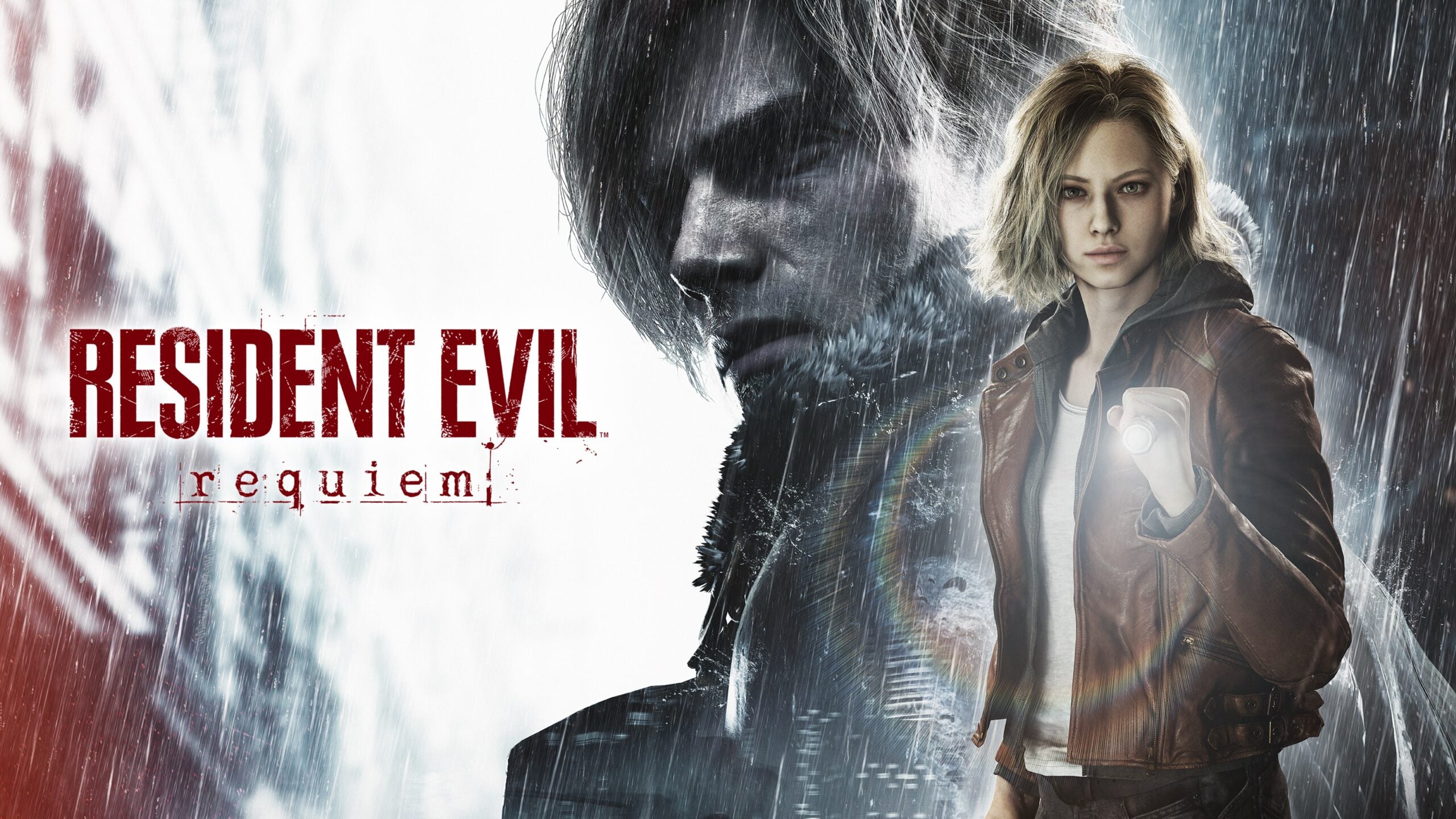
As Capcom celebrates the 30th anniversary of the zombie apocalypse Resident Evil series with the release of Resident Evil 9: Requiem, we celebrate the Greek mythology that drives the story of the game.
The 2026 survival horror title Resident Evil 9: Requiem represents one of the most overtly mythologically structured narratives in the franchise. While earlier entries in the Resident Evil series often drew loosely from bioethical fears or gothic horror, this installment leans heavily into the symbolic framework of Greek mythology—specifically the myth of Pandora’s jar (commonly called “Pandora’s Box”) and the figure of Elpis, the personification of hope. Rather than serving as a superficial naming convention, these mythological elements are deeply embedded into the game’s themes, plot structure, and moral questions, transforming what could have been a conventional bioweapon story into a meditation on hope, guilt, and the consequences of human ambition.
Pandora’s Myth: A Foundation for Catastrophe
To understand how Resident Evil 9 uses Greek mythology, we must first revisit the original myth. In ancient Greek tradition, Pandora was the first woman, created by the gods as a punishment for humanity after Prometheus stole fire. She was given a jar (later mistranslated as a “box”) and instructed not to open it. When curiosity overcame her, she released all the evils of the world—disease, suffering, death—into human existence. Only one thing remained inside: Elpis, or hope.
This myth is inherently ambiguous. Is hope a blessing that sustains humanity in the face of suffering, or is it another form of torment, prolonging pain by preventing despair? Thinkers from Hesiod to Nietzsche have debated this duality. Resident Evil 9 embraces this ambiguity and translates it into a modern bio-horror context.
Umbrella as Pandora: Opening the “Box”
In the world of Resident Evil, the role of Pandora is not played by a single individual but by institutions—primarily the Umbrella Corporation and its successors. Their reckless experimentation with the Progenitor Virus and its derivatives mirrors Pandora’s fateful act. Just as Pandora unleashed suffering upon the world, Umbrella’s actions released countless viral outbreaks, including the infamous destruction of Raccoon City.
The parallel is not subtle. Community interpretations often point out that the entire history of viral outbreaks in the series can be understood as the “opening” of Pandora’s jar:
“Pandora opened the box… releasing diseases… similarly to what Umbrella did with its virus research.”
In this reading, every zombie outbreak, mutation, and bio-organic weapon (B.O.W.) is one of the “evils” escaping into the world. The franchise’s long-standing obsession with uncontrollable scientific progress becomes, in Resident Evil 9, a direct mythological reenactment.
PANDORA and ARK: Literalizing the Myth
What makes Resident Evil 9 especially compelling is that it does not merely echo mythology—it literalizes it within the game’s worldbuilding. The central system housing the antiviral Elpis is explicitly named “PANDORA,” and it is located deep within a facility called ARK.
This naming choice is crucial. Unlike the original myth, where Pandora opens the container, here the “box” is deliberately sealed and protected. The system is designed to keep something hidden—suggesting a reversal of the myth’s initial act. Humanity has already unleashed its evils through decades of viral experimentation; now, the question is whether it deserves access to what remains inside.
This inversion transforms the player’s goal. Instead of preventing the opening of Pandora’s box, the characters must decide whether to open it again—this time in search of redemption.
Elpis: Hope Reimagined as a Cure
At the heart of the narrative lies Elpis, a substance initially believed to be a powerful bioweapon but ultimately revealed to be something else entirely: a universal antiviral capable of neutralizing nearly all virus-based infections in the series.
The name is not coincidental. In Greek mythology, Elpis is the embodiment of hope, the only entity left in Pandora’s jar after all evils escaped. In Resident Evil 9, this concept is reinterpreted with striking literalness: after decades of biological horrors, the final creation of Oswell E. Spencer—the architect of much of the series’ suffering—is not another weapon, but a cure.
This twist is central to the game’s thematic power. As one analysis notes, the story revolves around a supposed “bioweapon named Elpis” that is ultimately revealed to be “not a weapon but actually a cure.”
In mythological terms, this is the moment when the jar is reopened—not to release new evils, but to finally access what remained hidden all along.
Spencer as a Promethean Figure
Oswell E. Spencer, the mastermind behind Umbrella, can be interpreted as a hybrid of Prometheus and Zeus. Like Prometheus, he seeks to reshape humanity through forbidden knowledge—viral evolution instead of fire. Yet like Zeus, he ultimately becomes a controlling figure, manipulating humanity’s fate.
Elpis represents his final act: an attempt at redemption. According to in-game lore, Spencer viewed Elpis as his “blind hope,” suggesting regret over the devastation caused by his earlier work.
This aligns closely with the mythological ambiguity of Elpis. Is hope a genuine salvation, or merely a final, ironic twist? Spencer’s motivations are not entirely altruistic. Some characters interpret Elpis as a tool that could destabilize global power structures by rendering bioweapons obsolete, plunging the world into chaos.
Thus, even hope carries the potential for destruction.
Grace and the Role of the “Key” in Resident Evil Requiem
The character Grace Ashcroft functions as the narrative bridge between myth and modernity. Initially believed to be biologically tied to Elpis, she is treated as a “key” to unlocking it. This mirrors the mythological motif of a chosen individual interacting with divine or forbidden power.
However, the twist—that she is not intrinsically connected to Elpis—reinforces one of the game’s core themes: hope is not something inherent or predestined, but something chosen. Grace ultimately unlocks Elpis not because she is special in a biological sense, but because she makes a moral decision to trust in its potential.
This echoes the philosophical interpretations of Pandora’s myth. Hope is not guaranteed salvation; it is a possibility that must be actively embraced.
The Dual Nature of Hope
Perhaps the most sophisticated aspect of Resident Evil 9’s use of Greek mythology is its exploration of hope’s dual nature. In the original myth, scholars have long debated whether Elpis is a blessing or a curse. Some argue that hope sustains humanity, while others—like Nietzsche—suggest that it prolongs suffering by preventing acceptance of reality.
The game mirrors this ambiguity in several ways:
- Hope as Salvation: Elpis can cure infections, reverse mutations, and potentially end the era of bioweapons.
- Hope as Disruption: By rendering viral weapons obsolete, it threatens global power structures and could destabilize society.
- Hope as Moral Burden: With a cure available, the ethics of killing infected individuals become far more complex.
This last point is particularly important. As one community discussion highlights, the existence of Elpis transforms the moral landscape of the series: killing infected enemies is no longer an unquestioned necessity but a choice with ethical consequences.
In this way, hope does not simplify the world—it complicates it.
Pandora Revisited: A Second Opening
The climax of Resident Evil 9 can be understood as a second opening of Pandora’s jar. The first opening—Umbrella’s experiments—released suffering into the world. The second opening—Grace unlocking Elpis—releases the possibility of healing.
But unlike the myth, where hope remains trapped, here it is finally unleashed. This reinterpretation suggests a more optimistic worldview: humanity is not doomed to endless suffering but can, through its own choices, access redemption.
At the same time, the game avoids a purely hopeful conclusion. The potential misuse of Elpis, the geopolitical consequences, and the lingering scars of past outbreaks all suggest that hope alone is not enough. It must be managed, understood, and protected.
Resident Evil Requiem: A Modern Myth for a Bioengineered Age
What makes Resident Evil 9’s use of Greek mythology so effective is its adaptability. The myth of Pandora is not simply retold—it is recontextualized for a world defined by biotechnology, corporate power, and ethical ambiguity.
- Pandora’s jar becomes a high-tech vault.
- The evils of the world become engineered viruses.
- Elpis becomes a scientific breakthrough rather than a divine entity.
- The gods are replaced by corporations and shadow organizations.
Yet the core questions remain the same:
- What happens when humanity unleashes forces it cannot control?
- Is hope a blessing or a curse?
- Can redemption come after irreversible damage?
Elpis and Pandora: Hope After Horror
In Resident Evil 9: Requiem, the myth of Pandora and Elpis is not merely referenced—it is structurally embedded into the narrative. The game transforms a classical story about divine punishment into a modern parable about scientific hubris and moral responsibility.
Umbrella’s actions mirror Pandora’s catastrophic curiosity, unleashing a world of suffering through viral experimentation. The PANDORA system and ARK facility literalize the myth’s imagery, turning ancient symbolism into tangible gameplay elements. And at the center of it all lies Elpis—a reinterpretation of hope that is as dangerous as it is necessary.
By the end of the game, the player is left with a question that has echoed since ancient Greece: what does it mean for hope to remain after everything else is lost?
Resident Evil 9 does not offer a simple answer. Instead, it suggests that hope is neither purely good nor purely evil—it is a force that reflects humanity itself. Like Pandora’s jar, it can be opened or closed. And like the world of Resident Evil, what comes out of it depends entirely on the choices we make. Visit the official Capcom website of the game for more.
Discover more from Hellenic Moon
Subscribe to get the latest posts sent to your email.