Theos: Cities of Myth – Build a Civilization Under the Watchful Eyes of the Greek Gods
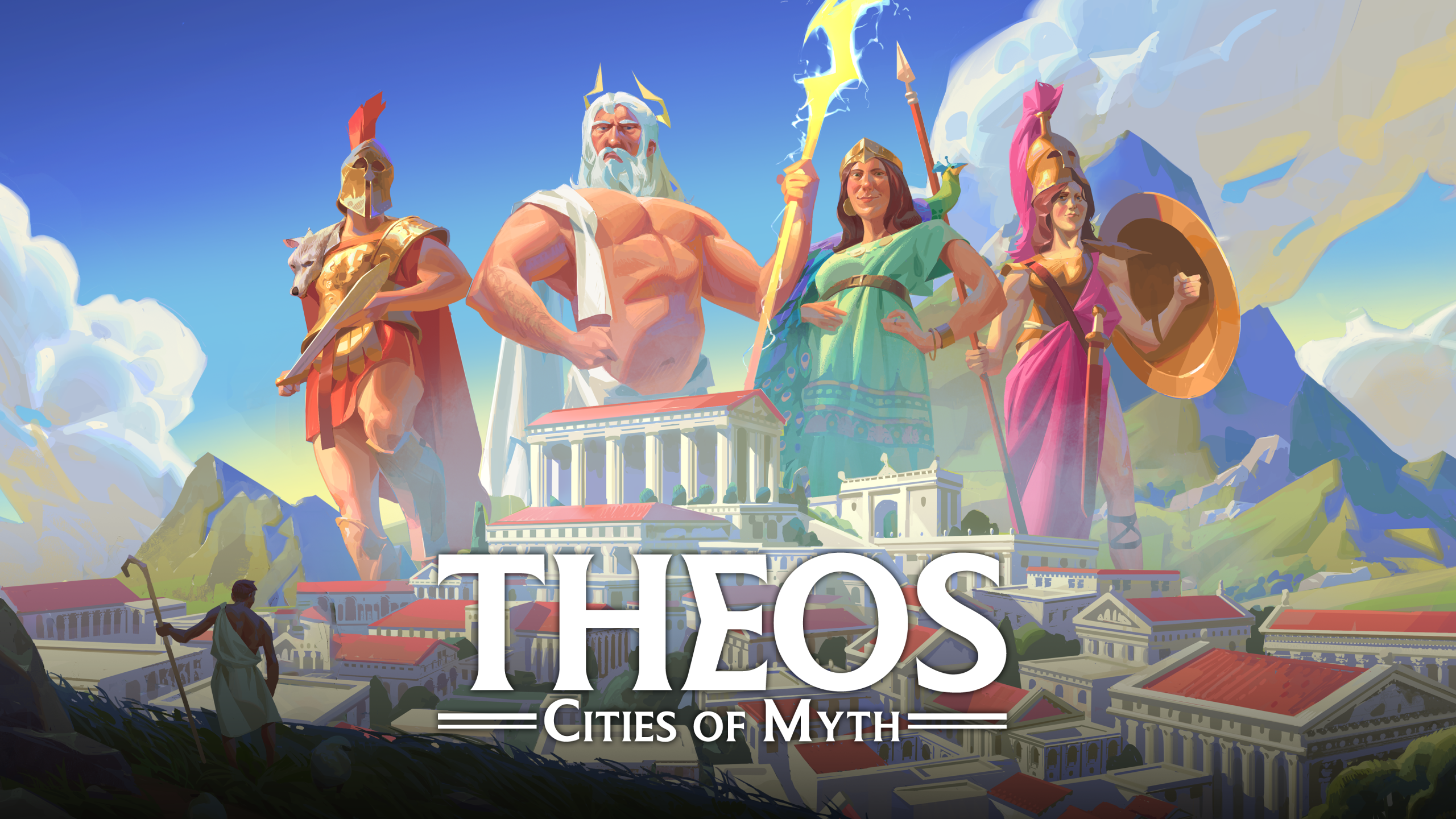
Released on 4 November 2026, Theos: Cities of Myth is a city-building and management strategy game that combines two fascinating subjects: ancient Greek civilization and the mythology of the Olympian gods. Developed by Triskell Interactive, the studio behind Pharaoh: A New Era, and published by Dotemu, the game invites players to establish their own Greek city-state, develop its economy, satisfy its citizens and earn the favour of the gods.
Unlike many historical city builders, Theos makes Greek religion and mythology fundamental to its gameplay. Every city is built around a particular patron deity, whose personality, demands and divine powers influence the development of the settlement. Players must balance the everyday responsibilities of governing a prosperous polis with the expectations of immortal beings who can reward devotion with extraordinary blessings or punish disobedience with divine wrath.
The result is an appealing combination of traditional city-building mechanics, economic management, diplomacy, military strategy and Greek mythology. It also provides an opportunity to explore the relationship between religion, politics and everyday life in the ancient Greek world.
A New City Builder from the Creators of Pharaoh: A New Era
Triskell Interactive previously developed Pharaoh: A New Era, a modern remake of the classic city-building game originally released in 1999. The studio demonstrated its interest in traditional management games, combining familiar construction mechanics with updated presentation and accessibility.
With Theos: Cities of Myth, the developers move away from ancient Egypt and into the world of ancient Greece. The basic philosophy remains familiar: players begin with a modest settlement and gradually transform it into a flourishing metropolis.
The game naturally invites comparisons with classics such as Pharaoh and Zeus: Master of Olympus. The latter is particularly relevant because it already explored the relationship between Greek mythology and city management. However, Theos introduces updated construction tools, greater control over certain units, military development and a stronger emphasis on the relationship between cities and their patron gods.
Players can experience the game through Adventure and Sandbox modes. Adventure offers structured scenarios and objectives, while Sandbox allows considerably more freedom to develop settlements. Together, these modes provide opportunities for both players who enjoy completing challenges and those who prefer experimenting with city design.
Building Your Own Ancient Greek Polis
At the heart of Theos is the concept of the polis, the ancient Greek city-state. A polis was much more than a collection of buildings. It represented a political, economic, religious and social community with its own institutions, traditions and identity.
This concept provides the foundation for the game’s construction and management systems. Players begin by establishing a sanctuary dedicated to their chosen deity. This becomes the spiritual centre of the settlement and an essential starting point for its development.
From there, they must construct residential districts, establish production facilities, create marketplaces and develop the infrastructure needed to support a growing population.
Citizens have increasingly sophisticated requirements as the city expands. They need food, housing, entertainment, cultural activities and access to different services. Buildings must be connected through effective road networks, while production facilities must supply the markets and distribution systems that keep the settlement functioning.
The economic system is particularly important. Agricultural production provides essential food supplies, while other industries produce the materials and goods necessary for construction, trade and urban development.
Players must also consider the physical organisation of their cities. Residential areas need appropriate services, commercial districts require access to supplies, and public buildings must be positioned to serve the population effectively.
The isometric perspective makes it possible to observe the gradual transformation of settlements from modest villages into impressive urban centres filled with temples, marketplaces and monumental architecture.
The Seven Olympian Gods: Choosing Your Divine Patron
Perhaps the most interesting feature of Theos is its pantheon of seven Greek gods. Religion is not simply represented through decorative temples. The deity chosen by the player becomes the patron of the city, influencing its development and providing different advantages.
Each god offers a different approach to civilization, encouraging players to experiment with different economic and strategic priorities.
Zeus, king of the Olympian gods, represents divine authority and leadership. His presence evokes the relationship between political power and religious legitimacy in ancient Greece. A city dedicated to Zeus seeks to establish itself as an important and respected centre of power.
Athena, goddess of wisdom, strategic warfare and crafts, is particularly appropriate for cities focused on culture, education and intellectual development. Her influence encourages the construction of philosophy schools and other cultural institutions. Historically, her most famous city was Athens, where she was worshipped as its patron goddess. The Parthenon remains one of the most recognisable monuments of ancient Greek civilization.
Ares, the god of war, offers a different approach. His presence encourages military expansion and the development of a powerful army. A settlement dedicated to Ares is more likely to become a military power, capable of defending its territory and challenging neighbouring city-states.
Poseidon, god of the sea, earthquakes and horses, is particularly appropriate for players interested in maritime expansion and colonisation. His mythology makes him an important figure for settlements whose economies depend on fishing, shipping and international trade.
Hermes, messenger of the gods and protector of travellers and merchants, is an attractive choice for economic development. His blessings can improve international trade by reducing import costs and increasing export returns.
Hera, queen of the gods and goddess associated with marriage and family, brings another dimension to city development. Her mythology is closely connected with family life, fertility and social order, making her a fitting patron for a community concerned with prosperity and population growth.
Finally, Dionysus, god of wine, theatre, celebration and ecstatic religious experience, offers a more festive approach. His presence encourages a civilization that values entertainment, cultural activities and the pleasures of everyday life.
These gods are not simply decorative additions. Their blessings, special buildings and requirements influence the player’s decisions. Maintaining their favour requires attention to their wishes, while neglecting their expectations can have negative consequences.
The system also gives the game considerable replayability. A settlement designed around Athena will develop differently from one dedicated to Ares or Hermes.
This relationship between divine favour and economic prosperity reflects ancient Greek religious practices. Cities frequently maintained special relationships with particular deities, constructing temples, organising festivals and offering sacrifices in exchange for divine protection and prosperity. Theos transforms this relationship into a central gameplay mechanic.
Greek Mythology Meets Historical Civilization
Another appealing aspect of Theos is the way it combines historical Greek civilization with mythological storytelling.
The developers describe the game as taking place in a reimagined version of ancient Greece, where history and mythology coexist. This allows players to encounter not only the gods but also legendary heroes and famous historical personalities.
As cities become increasingly prosperous, they can attract influential figures such as philosophers. The developers specifically mention Socrates and Aristotle as examples of historical personalities who can become associated with a flourishing settlement.
This is particularly appropriate because ancient Greek cities were centres of intellectual development. Athens, for example, became famous for its philosophical schools, political debates, theatrical performances and artistic achievements.
The inclusion of philosophy schools and theatres reflects the cultural importance of these activities. They are not simply decorative buildings but important institutions that help satisfy the needs of an increasingly sophisticated population.
Mythology becomes more directly connected to progression through the appearance of legendary heroes. These characters can be attracted to the city through divine favour and sent on quests inspired by famous Greek myths.
Figures such as Heracles, Perseus, Theseus and Jason became famous through their encounters with monsters, gods and supernatural challenges. Incorporating legendary heroes into a city-building experience gives Theos an additional narrative dimension.
Instead of simply constructing temples dedicated to the gods, players can gradually create a society that participates in the mythological traditions of ancient Greece.
Economy, Trade and the Expansion of City-States
Developing a prosperous settlement requires much more than constructing attractive buildings. The economic systems encourage players to think carefully about production, taxation, distribution and international trade.
Gold provides the financial foundation for construction. Citizens contribute through taxation, meaning that population growth and economic prosperity are essential to financing further expansion.
However, increasing taxation is not necessarily the best solution. Players must balance collecting sufficient revenue with keeping their citizens satisfied. A population lacking essential services or facing excessive financial demands will struggle to support the development of the city.
The production system introduces additional challenges. Agricultural buildings, mines, workshops and other facilities provide the resources necessary for urban development. These resources must be stored and distributed efficiently.
As the city grows, its requirements become more sophisticated. Citizens who initially need only food, water and basic housing eventually demand cultural institutions, entertainment and additional services.
Trade becomes particularly important when the local environment cannot provide everything the city requires. Players can establish commercial relationships with other settlements, importing missing resources and exporting surplus production.
The game also introduces colonies, allowing players to expand beyond their original city and develop new economic opportunities.
This reflects an important aspect of ancient Greek history. Greek civilization was never limited to the mainland. Greek settlers established colonies throughout the Mediterranean and Black Sea regions, including southern Italy, Sicily, North Africa and Asia Minor.
These colonies frequently developed into prosperous independent communities, maintaining commercial, cultural and religious connections with their original cities.
Theos incorporates this historical phenomenon into its strategic systems, allowing players to develop a wider network of settlements rather than concentrating exclusively on one city.
Diplomacy, Warfare and Rival City-States
Although economic management and construction form the foundation of the experience, Theos also introduces diplomacy and military strategy.
The player’s city does not exist in isolation. Other settlements develop their own economies, pursue ambitions and compete for resources and influence.
Players must decide how to deal with neighbouring communities. They can establish commercial relationships, form alliances, compete for resources or use military force to expand their territories.
The military system allows players to recruit armies for defensive purposes or to conquer neighbouring settlements. Battles take place in real time, introducing an additional strategic dimension to the city-building experience.
This competitive environment reflects ancient Greek history. The Greek world was characterised by numerous independent city-states, including Athens, Sparta, Corinth and Thebes. These communities frequently competed for political influence, territory and economic advantages.
Military conflicts were an important part of their history, from the rivalry between Athens and Sparta to the conflicts involving Persia and the Greek city-states.
Theos uses this environment to make expansion more challenging. A prosperous city must consider not only its internal needs but also its position within the wider political landscape.
However, the military element appears less developed than the economic side of the game. Early reviews have criticised the combat system for relatively simple unit management and repetitive encounters. Players primarily interested in sophisticated real-time warfare may therefore find this aspect less satisfying than the construction and economic mechanics.
Adventure and Sandbox Modes in Theos: Cities of Myth
Theos offers two principal ways to experience its world.
Adventure Mode provides structured progression through different scenarios and missions. Players encounter specific objectives, develop settlements under particular conditions and work towards fulfilling the expectations of their patron deity.
This mode is suitable for players who enjoy having clear objectives and overcoming economic and strategic challenges.
Sandbox Mode offers a more relaxed alternative. Players can concentrate on constructing and expanding their settlements without following the same sequence of objectives. It is particularly appealing for those who enjoy experimenting with different city layouts, production systems and economic strategies.
There are, however, some limitations. Early reviews have noted that Sandbox Mode relies on predetermined maps rather than offering extensive custom-map creation. Adventure objectives can also sometimes require considerable waiting and resource accumulation.
Nevertheless, having both modes gives players the opportunity to enjoy the game in different ways, whether they prefer structured challenges or creative freedom.
Graphics, Atmosphere and Presentation
Visually, Theos embraces a colourful isometric presentation reminiscent of the classic city-building games that inspired it.
The settlements feel alive, with citizens moving through streets, workers operating production facilities and buildings gradually transforming as the city develops.
The architectural style draws inspiration from ancient Greece, incorporating temples, residential buildings, marketplaces, public spaces and monumental structures.
One particularly appealing aspect is the contrast between ordinary urban life and the presence of the gods. A city can begin as a modest settlement and eventually become a magnificent metropolis dominated by enormous religious monuments.
The visual design also reinforces the identity of each city. A settlement dedicated to Athena can develop a strong cultural character, while one associated with Ares can emphasise military structures and defensive capabilities.
The environmental presentation is one of the game’s strengths, although the audio design has received more mixed reactions. Some early reviewers have suggested that the music and environmental sounds do not always communicate the same sense of activity and atmosphere as the visuals.
How Has the Game Been Received?
Since its release on 4 November 2026, Theos has attracted attention from fans of historical strategy games and Greek mythology.
Initial reviews suggest that the game succeeds particularly well at recreating the pleasure of traditional city-building experiences.
GamesHedge awarded it 7.5/10, praising its attractive presentation, accessible management systems, detailed tutorials and the relationship between the gods and city development.
However, the review also highlighted limitations involving construction mechanics, restrictive Sandbox options, repetitive Adventure objectives, combat and sound design.
Tech-Gaming similarly awarded the game 72%. Its review appreciated the economic management, the satisfaction of watching settlements develop and the improvements to the traditional city-building formula.
One criticism concerned the management of service workers. Although players have more control over their routes, adjusting these routes repeatedly can become tedious as settlements expand. The review also considered the military encounters less sophisticated than the economic systems.
These early assessments suggest that Theos is a promising city builder rather than a revolutionary reinvention of the genre. Its greatest strengths lie in its setting, mythology-inspired progression and the satisfaction of developing a thriving ancient Greek settlement.
It is also worth remembering that these are early reviews, published shortly after launch. Future updates could improve some of the systems that have attracted criticism.
Theos: Cities of Myth – Availability and Price
Theos: Cities of Myth
Released 4 November 2026
Developer: Triskell Interactive
Publisher: Dotemu
Platform: PC (Steam)
Genre: City Builder / Strategy / Simulation
Launch price: $19.99
The game is available on PC through Steam. At launch, Dotemu announced a temporary 20% discount running until 11 November 2026.
The game also offers Steam achievements and cloud saves, and its Steam listing identifies it as playable on Steam Deck.
Theos: Cities of Myth – A City-Building Game Worthy of Olympus?
Theos: Cities of Myth is an interesting addition to the growing collection of videogames inspired by ancient Greek mythology. Rather than focusing exclusively on legendary heroes, monsters or divine conflicts, it explores another aspect of the ancient Greek world: the development of cities and the societies that inhabited them.
Its greatest achievement is the way it makes mythology relevant to the actual gameplay. The gods are not simply characters appearing in the background or names attached to decorative temples. They influence the economy, construction, cultural development and military ambitions of the city.
This is particularly appealing because religion was an essential component of ancient Greek civilization. Cities maintained relationships with their patron deities, organised religious festivals, constructed magnificent temples and sought divine protection. Theos translates these ideas into a management system that gives mythology a genuine purpose within the game.
The inclusion of historical personalities such as Socrates and Aristotle, alongside legendary heroes and the Olympian gods, also creates an appealing mixture of historical and mythological imagination.
There are certainly areas where the game could improve. The military system appears less sophisticated than its economic mechanics, while some management responsibilities can become repetitive. Players looking for extremely complex city-building simulations may also find certain systems relatively straightforward.
Nevertheless, for fans of Greek mythology, ancient history and traditional city-building games, Theos offers an appealing experience.
It is particularly interesting when considered alongside other videogames inspired by ancient Greece. While Hades and Hades II explore the supernatural world of Greek mythology through action and storytelling, God of War focuses on the gods, monsters and heroes through epic adventures. Age of Mythology incorporates mythology into real-time strategy, while Theos: Cities of Myth approaches the subject from the perspective of civilization-building.
Ultimately, the game offers players an opportunity to create their own version of ancient Greece, deciding which gods deserve their devotion, which cities deserve their protection and what kind of civilization should emerge under their leadership.
Will you build a magnificent cultural capital under Athena, a powerful military empire under Ares, a prosperous trading network under Hermes or a city devoted to the celebrations of Dionysus?
Whatever your choice, one thing remains certain: in Theos, creating a successful civilization requires keeping both the citizens and the gods happy.
And considering the unpredictable personalities of the Olympians, that might prove to be the greatest challenge of all.
Discover more from Hellenic Moon
Subscribe to get the latest posts sent to your email.