Movies Inspired by The Odyssey
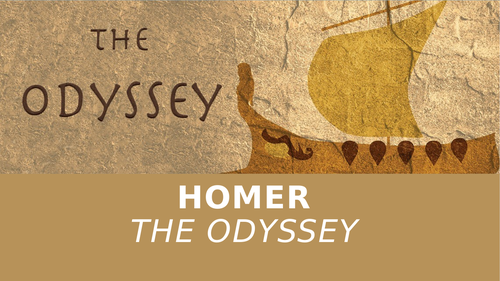
Homer’s Odyssey was voted the story that most shaped the world by a BBC News poll a few years ago. You might not realize it, but many other stories and movies throughout history have been based on and inspired by The Odyssey. To help you understand this, we will look at some of these movies, many of which are covered in our book: Greece at the Oscars.
When we say inspired by The Odyssey, we mean films whose plot, characters, structure, journey, homecoming story, or specific episodes are recognizably derived from Homer, rather than simply films that have a vaguely “mythic” feel.
We divide them into various levels of connection: direct adaptations, modern retellings, strong plot parallels, and more distant/informal interpretations. There are also a number of obscure international and animated films that are easy to miss.
Direct adaptations and retellings
These are the obvious ones: films that actually tell Odysseus’ story or explicitly recreate substantial portions of Homer’s poem.
| Film | Year | Connection to The Odyssey |
|---|---|---|
| The Island of Calypso: Ulysses and the Giant Polyphemus | 1905 | Georges Méliès short based on episodes involving Calypso and Polyphemus |
| The Return of Ulysses | 1909 | Early silent adaptation of Odysseus’ return |
| L’Odissea | 1911 | One of the earliest full cinematic adaptations |
| Die Heimkehr des Odysseus | 1918 | German adaptation/parody |
| Die Heimkehr des Odysseus | 1922 | Another German silent version |
| Ulysses | 1954 | Major Italian feature starring Kirk Douglas |
| The Odyssey | 1968 | Franco-Italian-German-Yugoslav television miniseries |
| The Return of Ulysses to His Homeland | 1973 | Television adaptation |
| Ulysses 31 | 1981 | Japanese-French-Luxembourgian animated series based on The Odyssey |
| Uliisses | 1982 | German adaptation |
| Nostos: The Return | 1989 | Highly artistic interpretation of Odysseus’ homecoming |
| Ulysses’ Gaze | 1995 | Theo Angelopoulos’ very loose modern interpretation |
| The Odyssey | 1997 | Famous NBC miniseries starring Armand Assante |
| The Animated Odyssey | 2000 | Animated adaptation |
| Odysseus and the Journey Home | 1998 | Animated/television episode in the Mythic Warriors: Guardians of the Legend series |
| Odysseus and the Isle of the Mists | 2008 | Original fantasy adventure built around Odysseus’ voyage |
| Troy: The Odyssey | 2017 | Low-budget fantasy version of the Homeric story |
| The Return | 2024 | Ralph Fiennes as Odysseus, focusing particularly on his return to Ithaca |
| The Odyssey | 2026 | Christopher Nolan’s major theatrical adaptation |
The earliest material is particularly fascinating. L’Odissea (1911), for example, follows Odysseus from the Cyclops through the Sirens, Scylla and Charybdis and ultimately back to Ithaca, making it remarkably ambitious for a 44-minute silent film.
Nostos: The Return is a particularly interesting case because it isn’t simply a conventional adventure film. Franco Piavoli uses the Odyssey’s homecoming as the framework for a dreamlike meditation on memory, nature, war and the desire to return home.
And of course, Christopher Nolan’s The Odyssey (2026) belongs at the top of the modern list: it is an explicit adaptation of Homer’s poem, released theatrically on July 17, 2026.
The strongest modern reworkings
These are perhaps the most interesting films for what you’re looking for because they take Homer’s basic story and transplant it into another world.
O Brother, Where Art Thou? (2000)
This is unquestionably the most famous modern cinematic Odyssey.
Joel and Ethan Coen transplant Odysseus’ journey to 1937 Mississippi. George Clooney plays Ulysses Everett McGill, whose name immediately signals the connection to Odysseus/Ulysses.
The correspondences are extensive: Everett is trying to get home to his wife Penny; he encounters a blind prophet, three Sirens, a Cyclops-like one-eyed antagonist, and various strange communities along his journey. Penny’s suitors parallel Penelope’s suitors, while the final return home provides the equivalent of Odysseus reclaiming Ithaca.
This is the essential modern Odyssey film.
Cold Mountain (2003)
This one is much more interesting than many people realise.
Anthony Minghella’s Civil War epic follows Inman, played by Jude Law, as he attempts to travel home from the war to Ada, played by Nicole Kidman.
Charles Frazier’s original novel was consciously constructed as an Odyssey-like homecoming story, and the film preserves that structure. Inman’s journey consists of a series of encounters, dangers, temptations and strange characters while Ada waits at home.
It is essentially:
Trojan War → Civil War
Odysseus → Inman
Ithaca → Cold Mountain
Penelope → Ada
Odysseus’ journey home → Inman’s journey home
It is one of the best examples of an Odyssey transplanted into historical drama.
The Searchers (1956)
John Ford’s classic Western is another remarkably strong candidate.
John Wayne’s Ethan Edwards returns from war only to discover that his family has been attacked and his niece kidnapped. He then embarks upon a years-long journey to find her.
The film has been explicitly analysed by classicists as a “Western Odyssey.” One academic study argues that Ford uses Homeric motifs and the structure of the Odyssey to construct Ethan’s journey.
The connection is particularly interesting because Ethan’s journey isn’t simply about finding someone. It is about whether a man who has spent years wandering can actually return home.
The Irish Film Institute itself has described Ethan as a Homeric figure undertaking a grim odyssey.
That makes it a darker variation on the nostos — the Greek concept of homecoming — at the centre of Homer.
Ulysses (1967)
Joseph Strick’s film adaptation of James Joyce’s Ulysses follows Leopold Bloom and Stephen Dedalus through one day in Dublin, with the events deliberately paralleling Odysseus’ wanderings.
James Joyce’s Ulysses is itself a modern rewriting of The Odyssey, so films based on Joyce’s novel are technically two generations removed from Homer.
Ulysses’ Gaze (1995)
Theo Angelopoulos’ extraordinary Greek/Balkan film takes the idea of Odysseus’ journey and turns it into a journey through the fractured history of the Balkans.
Harvey Keitel plays a filmmaker searching for lost film reels while travelling through Greece and the Balkans. The protagonist is effectively a modern Ulysses wandering through a landscape marked by war, displacement and memory.
The film is officially described as being loosely based on Homer’s Odyssey.
This is probably one of the most intellectually sophisticated modern interpretations of Homer on film.
The SpongeBob SquarePants Movie (2004)
Yes — genuinely.
SpongeBob and Patrick leave Bikini Bottom and undertake a dangerous journey to recover King Neptune’s stolen crown.
The film contains:
- a dangerous voyage;
- a sea god;
- seductive Sirens;
- a Cyclops;
- supernatural obstacles;
- the loss of transportation;
- a difficult journey home.
The filmmakers themselves conceived the story as a heroic odyssey, and modern analyses explicitly identify the Homeric influence.
It is basically The Odyssey for children, with a sponge instead of Odysseus.
Films with very strong “Odyssey” structures
Here the connection becomes more interpretative, but some are sufficiently strong to be worth including.
2001: A Space Odyssey (1968)
The title gives away the connection, but the relationship goes beyond the title.
Stanley Kubrick’s film deliberately frames humanity’s journey into space as an Odyssey. David Bowman becomes an updated wandering hero travelling through an unknowable world, confronting strange forces and ultimately undergoing transformation.
The film isn’t a retelling of Homer, but its conception of journey, discovery, unknown worlds and transformation deliberately invokes the epic tradition. Recent discussions of Homeric adaptations also place it among the major works inspired by The Odyssey.
The Warriors (1979)
Walter Hill’s cult classic follows a gang attempting to travel from the Bronx back to Coney Island after being falsely blamed for a murder.
That gives us:
departure → dangerous territory → encounters with hostile groups → repeated obstacles → journey home.
There is a particularly interesting historical connection here because the film’s premise also draws upon Xenophon’s Anabasis, itself a famous Greek story of an army trying to get home. Modern discussions of The Odyssey frequently place The Warriors within this broader “journey home” tradition.
After Hours (1985)
Martin Scorsese’s bizarre night-time comedy follows Paul Hackett through an increasingly surreal series of encounters as he desperately attempts to get home.
It has the fundamental Odyssey structure:
leave home → encounter increasingly bizarre obstacles → become trapped in a strange world → desperately seek return → finally get home.
It is essentially an urban, Kafkaesque Odyssey compressed into one night.
Keyhole (2011)
This is a particularly obscure one.
Guy Maddin’s surreal gangster film stars Jason Patric as Ulysses Pick, who returns home and finds himself travelling through his own enormous house.
The title and protagonist’s name are deliberate signals. The film effectively transforms the Odyssey into a surreal gangster/haunted-house story.
It’s one of the stranger entries on the list and absolutely worth investigating if you’re interested in unusual Homer adaptations.
Other films worth including
There are several films where the Homeric influence is less obvious but still worth mentioning:
- The Wizard of Oz (1939) – Dorothy’s journey to get home is inspired by The Odyssey. So we also include the modern Wicked movies and 1985’s Return to Oz because they are based in the Wizard of Oz world.
- 20,000 Leagues Under The Sea (1954) – Jules Verne is known to have been inspired by Greek myths such as the Odyssey and Greek author Lucian of Samosata and his satire A True Story when writing 20,000 Leagues Under the Sea
- The Natural (1984) – The Natural is a movie about a baseball player (Robert Redford) and draws many elements from Homer’s Odyssey in its storytelling.
- Ulee’s Gold (1997) – Ulee’s Gold is inspired by Homer’s Odyssey. It tells the story of Vietnam veteran Ulysses “Ulee” Jackson who returns from war to take care of his family.
- Inside Llewyn Davis (2013) — the Coens’ second major Homeric-inflected journey, following a wandering musician caught in a cycle of departures and returns. History specifically notes the Coens’ return to Homeric themes in this film.
- The Big Fish (2003) — a son’s attempt to reconstruct his father’s extraordinary journeys, with the film functioning as a modern mythic journey.
- Dude, Where’s My Car? (2000) — an extremely loose comedic version of the “lost heroes trying to find their way home” concept; it has recently been identified as an unexpected Odyssey parallel.
Discover more from Hellenic Moon
Subscribe to get the latest posts sent to your email.