The Odyssey Effect by Erica Stevenson out now!
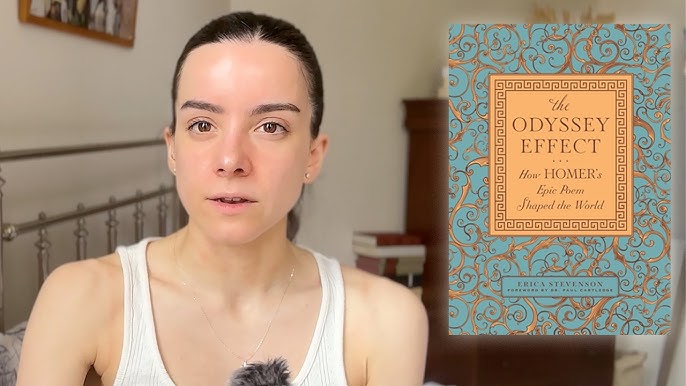
Few works of literature have exerted as much influence on human civilization as the ancient Greek epic known as The Odyssey. More than 2,700 years after it was first composed, the story of the wandering hero Odysseus continues to inspire novels, films, television series, theatrical productions, philosophical debates, and academic scholarship. In her new book, The Odyssey Effect, historian and classicist Erica Stevenson sets out to answer a fascinating question: why has this ancient tale remained so powerful for so long?
Published just this week, The Odyssey Effect explores how Homer’s epic has shaped world culture from ancient Greece to the modern era. Stevenson examines the poem’s influence on literature, art, philosophy, film, television, and popular culture, demonstrating that The Odyssey is not merely a surviving relic of antiquity but a living story that continues to evolve with every generation. The book aims to make classical literature accessible to modern readers while highlighting the remarkable ways in which ancient myths continue to shape contemporary culture.
A Journey Through Cultural History
One of the book’s greatest strengths is its broad perspective. Rather than focusing solely on the text of Homer’s poem, Stevenson traces the long cultural journey of The Odyssey itself. She explores how different societies have interpreted Odysseus and his adventures according to their own values, fears, and aspirations.
According to the book’s description, Stevenson examines literary retellings, theatrical adaptations, artistic interpretations, and modern pop-culture references, revealing how each era discovers something new within the ancient epic. The result is not simply a study of Homer but a study of the civilizations that have embraced Homer over the centuries.
This approach makes The Odyssey Effect particularly appealing to readers who may feel intimidated by ancient literature. Stevenson recognizes that many modern readers find the original poem difficult because of its age, language, and unfamiliar cultural context. Her goal is to unpack its themes and explain why they remain relevant today.
The author’s background makes her well suited to this task. Stevenson studied Classical Civilization at New York University and has become known for making ancient history accessible through her educational work and online content. Her passion for connecting the ancient and modern worlds is evident throughout the project.
Why The Odyssey Matters
To understand the significance of Stevenson’s book, it is necessary to understand the significance of The Odyssey itself.
Traditionally attributed to Homer, The Odyssey tells the story of Odysseus, king of Ithaca, as he struggles to return home after the Trojan War. While the war itself is the subject of Homer’s other great epic, The Iliad, The Odyssey focuses on the aftermath.
For ten years Odysseus wanders across the Mediterranean. He encounters monsters, witches, gods, temptations, and disasters. He blinds the Cyclops Polyphemus, resists the enchanting songs of the Sirens, journeys to the Underworld, and survives the wrath of the sea god Poseidon. Meanwhile, his wife Penelope and son Telemachus struggle to preserve their household against aggressive suitors who assume Odysseus is dead.
On the surface, it is an adventure story. Yet beneath the action lies a profound exploration of human existence.
The epic asks timeless questions:
- What does it mean to belong somewhere?
- How do people endure hardship?
- What makes a good leader?
- Can intelligence overcome brute force?
- How does a person remain faithful to their identity while changing through experience?
These questions are as meaningful today as they were in ancient Greece.
The Odyssey Effect: The First Great Hero’s Journey
One reason The Odyssey remains influential is that it established a storytelling structure that countless later works would follow.
The hero leaves home, faces trials, receives supernatural aid, gains wisdom through suffering, and eventually returns transformed. This pattern appears repeatedly throughout world literature and modern entertainment.
Many famous fictional characters owe something to Odysseus. The adventurous traveler, the clever survivor, the reluctant hero, and the determined wanderer all descend in some way from Homer’s creation.
Stevenson’s book reportedly highlights how later writers and artists adapted these themes to suit their own times. The poem’s influence can be found in works by figures such as Dante Alighieri, Miguel de Cervantes, Alfred Lord Tennyson, and James Joyce.
Perhaps the most famous modern literary adaptation is Joyce’s Ulysses, which transforms Odysseus’s epic journey into a single ordinary day in Dublin. The fact that a Bronze Age Greek hero could become the inspiration for one of the twentieth century’s most celebrated novels demonstrates the extraordinary flexibility of Homer’s story.
Homecoming as a Universal Theme
At the heart of The Odyssey lies the concept of homecoming.
The ancient Greeks called it nostos, a word that eventually gave rise to our modern term “nostalgia.” Odysseus’s journey is not merely about travel. It is about returning to what truly matters.
This theme helps explain why readers across centuries continue to connect with the poem. Everyone experiences separation, longing, and the desire to find a place of belonging. Whether one interprets home literally, emotionally, or spiritually, Odysseus’s struggle resonates with universal human experience.
Stevenson’s focus on the poem’s cultural legacy appears particularly effective because she recognizes that every generation redefines what “home” means. For ancient Greeks it might have meant family and kingdom. For modern audiences it can represent identity, memory, community, or personal fulfillment.
The enduring appeal of The Odyssey lies partly in its ability to accommodate all these interpretations simultaneously.
Influence of The Odyssey on Modern Popular Culture
One of the most intriguing aspects of The Odyssey Effect is its emphasis on popular culture. In the past, we covered how a BBC News poll voted Homer’s Odyssey as the most important literature that impacted the world.
Rather than treating Homer as something confined to university classrooms, Stevenson demonstrates how the epic continues to appear in unexpected places. The book reportedly discusses influences on television, film, theater, and even animated series. Examples range from Shakespearean adaptations to modern productions involving shows such as The Simpsons and SpongeBob SquarePants.
This is one of the most valuable contributions of the book.
Many people encounter Homer without realizing it. Every time audiences watch a story about a hero struggling to return home after a long journey, they are engaging with a narrative tradition that stretches back to The Odyssey. Every time a clever protagonist triumphs through intelligence rather than strength, they encounter an archetype shaped by Odysseus.
Modern cinema has repeatedly drawn upon Homeric themes. Science-fiction adventures, fantasy epics, war stories, and road-trip narratives often borrow elements from Odysseus’s journey. Even when the connection is indirect, the influence remains visible.
Odysseus: A Complex Hero
Another reason for the poem’s longevity is the complexity of its protagonist.
Unlike many heroes, Odysseus is not perfect.
He is brave but arrogant. Intelligent but deceptive. Loyal to his family yet frequently tempted. Compassionate at times and ruthless at others.
This moral complexity feels remarkably modern.
Readers may admire Odysseus while simultaneously questioning his decisions. Such ambiguity invites discussion and reinterpretation. Different generations can emphasize different aspects of his character.
Ancient audiences celebrated his cunning. Renaissance readers admired his thirst for knowledge. Modern readers often focus on his psychological struggles and personal flaws.
Stevenson’s exploration of how societies have interpreted Odysseus over time helps explain why he remains one of literature’s most fascinating characters.
The Educational Value of the Book
Although The Odyssey Effect is aimed at a general audience, it also serves an educational purpose.
Many books about classical literature assume extensive prior knowledge. Stevenson instead appears to function as a guide, introducing readers to major themes, historical contexts, and cultural developments without overwhelming them with academic jargon.
This accessibility is particularly important today.
Classical studies often struggle against the misconception that ancient texts are irrelevant or inaccessible. Books like The Odyssey Effect demonstrate the opposite. They show that ancient stories continue to shape modern culture in ways that are both visible and invisible.
Readers interested in mythology, literature, history, or film will likely find value in Stevenson’s broad interdisciplinary approach.
The Odyssey Effect by Erica Stevenson
The Odyssey Effect succeeds because it recognizes a simple truth: great stories never truly disappear.
Instead, they evolve.
Erica Stevenson does not merely retell Homer’s epic. She traces its extraordinary afterlife across nearly three millennia of human culture. By examining adaptations, reinterpretations, and cultural responses, she reveals how The Odyssey became one of the foundational texts of Western civilization and a continuing source of inspiration throughout the world.
The book is especially valuable for readers who love mythology and wish to understand why ancient Greek stories continue to matter. It demonstrates that Homer’s poem is not simply a historical artifact but a living narrative that continues to influence literature, entertainment, and our understanding of human experience.
Ultimately, the greatest achievement of The Odyssey Effect is that it reminds readers why The Odyssey has endured for nearly three thousand years. The adventures of Odysseus are exciting, but the deeper appeal lies in the poem’s exploration of identity, perseverance, family, temptation, wisdom, and the universal desire to find one’s way home.
As long as people continue to embark on journeys—whether across oceans, across continents, or within themselves—the story of Odysseus will remain relevant. Stevenson’s book offers a compelling explanation of how and why that ancient voyage continues to shape the modern world. For more info about Erica Stevenson, visit her site Modern Ancients.
Discover more from Hellenic Moon
Subscribe to get the latest posts sent to your email.