Krapopolis: ancient Greek adult animated sitcom from the co-creator of Rick & Morty
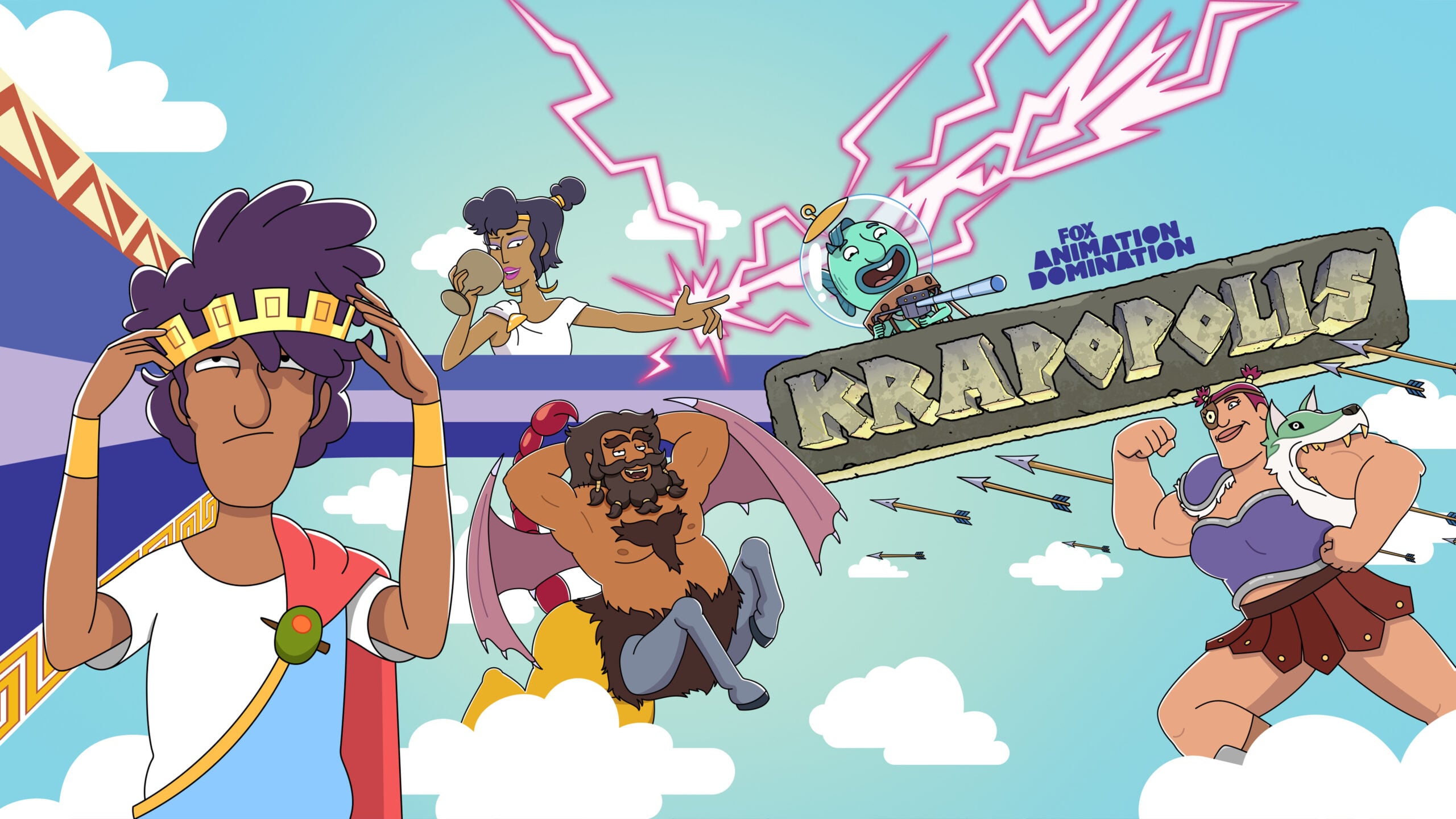
Among the many animated comedies released in recent years, Krapopolis has carved out a unique identity by blending modern humor with one of the oldest storytelling traditions in the world. Created by Dan Harmon, the mastermind behind Community and co-creator of Rick and Morty, the series imagines an alternate version of Ancient Greece where gods, monsters, humans, and mythical creatures all live together in the world’s first city. Rather than attempting to recreate Greek mythology with historical accuracy, Krapopolis embraces the absurdity of both mythology and modern society, using one to parody the other.
At first glance, the show appears to be a straightforward adult animated comedy, but beneath its rapid-fire jokes lies a genuine appreciation for the myths, legends, and history of Ancient Greece. Nearly every episode draws inspiration from classical mythology, whether through its characters, its setting, or its exploration of the origins of civilization. The result is a series that is entertaining for casual viewers while rewarding those familiar with Greek myths and history with countless references and clever reinterpretations.
The Premise of Krapopolis: Building Civilization One Disaster at a Time
The central story of Krapopolis revolves around Tyrannis, a young ruler who dreams of creating one of humanity’s first organized cities. While this sounds like the beginning of a grand epic, the show immediately turns the concept into comedy by making Tyrannis’ greatest obstacle his own family. Every attempt to establish laws, traditions, diplomacy, or infrastructure is undermined by relatives who possess incredible supernatural abilities but almost no emotional maturity.
His mother Deliria is an immortal goddess whose whims can instantly undo months of planning. His father Shlub, a bizarre mantitaur who is part human, part lion, and part scorpion, approaches nearly every problem with enthusiasm rather than intelligence. Tyrannis’ siblings are equally eccentric, each contributing their own brand of chaos whenever the city appears to be making progress.
The family’s constant interference mirrors one of the oldest themes in Greek mythology. Heroes rarely struggle against ordinary circumstances. Instead, they are forced to navigate the unpredictable behavior of gods, monsters, and relatives whose divine powers often create problems that no human could reasonably solve. In that sense, Tyrannis is a surprisingly traditional Greek hero despite existing in a satirical animated comedy.
Greek Gods Were Never Perfect
One of the most authentic aspects of Krapopolis is its portrayal of the gods as flawed individuals. Modern audiences often imagine gods as morally perfect or all-wise beings, but the deities of Greek mythology were anything but idealized. They were immortal, enormously powerful, and capable of incredible feats, yet they were also jealous, selfish, impulsive, romantic, vindictive, and often spectacularly petty.
The myths are filled with examples of gods interfering in human lives simply because they were offended, bored, or pursuing personal rivalries. Zeus constantly involved himself in mortal affairs, Hera’s jealousy frequently led to devastating punishments, Poseidon could destroy entire kingdoms over perceived insults, and Aphrodite often manipulated love merely for amusement.
Krapopolis embraces this tradition completely. Rather than portraying divine beings as distant rulers of the universe, the show presents them as an immortal family whose personalities remain at times dysfunctional despite their limitless power. This interpretation may seem exaggerated for comedic purposes, but it actually reflects the tone of many surviving Greek myths surprisingly well.
Deliria and the Legacy of the Olympians
Deliria is perhaps the clearest example of how Krapopolis adapts Greek mythology without copying it directly. She is not based on any single Olympian deity. Instead, she combines characteristics found throughout the Greek pantheon into one unforgettable character.
Like Hera, she can become fiercely vindictive whenever she feels slighted. Like Aphrodite, she can manipulate relationships simply because she finds them entertaining. Her love of celebration, excess, and emotional unpredictability recalls Dionysus, while her complete confidence that everyone should adapt to her desires echoes Zeus himself.
Rather than creating a one-to-one adaptation of a specific goddess, the writers have produced a character who captures the collective personality of the Olympians. She perfectly represents the chaotic force that divine beings often embodied in Greek mythology, where immense power rarely came with corresponding wisdom.
Tyrannis as the Civilizing Hero
Although Tyrannis spends much of the series struggling with bureaucratic disasters rather than battling legendary monsters, he fits comfortably within the long tradition of Greek civilizing heroes. Many famous figures from mythology earned their reputations not simply through acts of courage but by establishing cities, introducing laws, or creating stable societies.
Heroes such as Cadmus, Theseus, and Perseus all became associated with the founding of kingdoms and the establishment of order from chaos. Their adventures helped shape the identity of the Greek world, both literally and symbolically.
Tyrannis continues this tradition in a modern comedic setting. His greatest victories often involve creating institutions that most people take for granted, such as organized government, diplomacy, commerce, or urban planning. Instead of slaying dragons, he battles administrative disasters, political disagreements, and impossible family members. The comedy comes from treating the birth of civilization as if it were an endless series of workplace crises.
The Birth of the Polis
Perhaps the most historically interesting aspect of Krapopolis is its focus on the creation of the polis, the Greek city-state. Historically, the polis represented far more than a collection of buildings. It was a revolutionary political and social institution that organized citizens around shared laws, religious practices, military service, and civic identity.
Cities such as Athens, Sparta, Corinth, and Thebes became independent political communities with distinct cultures and governments. Their development transformed Greek civilization and laid the foundations for many concepts that still influence the modern world, including citizenship, constitutional government, and democratic participation.
Krapopolis humorously imagines how difficult this process might actually have been. Rather than presenting civilization as an inevitable achievement, the series suggests that every invention—from public administration to taxation—required someone willing to solve problems that nobody had previously encountered. By treating these historical developments as comedic adventures, the show makes ancient political history surprisingly accessible.
Monsters as Ordinary Citizens in Krapopolis
Another clever feature of the series is the way it integrates mythological creatures into everyday society. In traditional myths, monsters such as centaurs, cyclopes, satyrs, sirens, and other legendary beings often appeared as isolated threats that heroes had to overcome. In Krapopolis, however, these creatures are simply members of society, each contributing to the city’s daily life in one way or another.
This creative decision actually reflects an important characteristic of Greek mythology. The ancient Greeks imagined a world populated by an enormous variety of supernatural beings. Forests, rivers, mountains, caves, and oceans were believed to contain nymphs, spirits, monsters, and divine creatures. The boundaries separating humanity from the supernatural were far less rigid than they often appear in modern fantasy stories.
By making monsters into ordinary citizens rather than extraordinary villains, Krapopolis embraces this mythological worldview while simultaneously creating endless opportunities for comedy.
Ancient Politics Through Modern Comedy
Politics provides many of the show’s funniest storylines, but beneath the jokes lies a surprisingly sophisticated understanding of Greek political history. Ancient Greece experimented with many different systems of government, including monarchies, oligarchies, democracies, and tyrannies.
The protagonist’s name, Tyrannis, carries an especially clever historical reference. Today the word “tyrant” suggests cruelty and oppression, but in early Greek history a tyrannos was simply someone who ruled outside traditional hereditary monarchy. Some early tyrants were even popular reformers before the term gradually acquired its negative meaning.
The series uses this historical nuance to create additional layers of satire. Tyrannis genuinely wants to improve society, yet he constantly struggles to balance authority, responsibility, and public opinion. His political dilemmas may be exaggerated for humor, but they echo real questions that ancient Greek thinkers debated centuries ago.
Philosophy Before Philosophy
Many episodes of Krapopolis explore ideas that would later become central to Greek philosophy. Questions about justice, leadership, human nature, civic responsibility, and the purpose of government appear throughout the series, even when disguised beneath absurd situations and outrageous jokes.
Long before Socrates, Plato, and Aristotle formally examined these subjects, Greek myths frequently explored similar issues through stories about heroes, kings, and gods. Tyrannis’ attempts to govern wisely often resemble philosophical thought experiments, asking whether civilization depends more upon laws, morality, intelligence, or simple cooperation.
The series therefore imagines a world standing on the threshold of the intellectual revolution that would eventually produce some of history’s greatest philosophers.
Family Drama in Greek Mythology
Family conflict has always been one of Greek mythology’s defining themes. The gods themselves are locked in endless cycles of rivalry, betrayal, succession, and revenge. Uranus is overthrown by Cronus, who is in turn overthrown by Zeus. Entire royal families, such as the House of Atreus or the rulers of Thebes, become trapped in generations of violence and tragedy.
Krapopolis transforms this tradition into comedy without abandoning its mythological roots. Tyrannis constantly finds himself trying to solve civic problems while simultaneously managing impossible relatives whose emotional instability threatens the future of the city. The scale is humorous rather than tragic, but the underlying theme remains remarkably faithful to classical mythology. Civilization, the show suggests, is difficult enough without adding divine family drama.
Mythological Humor Has Ancient Roots
Although Krapopolis presents Greek mythology through modern animation, the idea of laughing at the gods is far from new. Ancient Greek audiences frequently enjoyed comedies that mocked politicians, philosophers, heroes, and even the Olympian deities themselves. The playwright Aristophanes became famous for satirizing nearly every aspect of Athenian society, proving that humor has always been an important part of Greek culture.
In many ways, Krapopolis continues this tradition rather than reinventing it. The series pokes fun at mythology because the Greeks themselves often did exactly the same thing. By embracing satire instead of treating myths as untouchable legends, the show captures an important aspect of ancient storytelling that is sometimes forgotten today.
Historical Accuracy Versus Mythological Truth
The world of Krapopolis deliberately mixes together different periods of Greek history and mythology. Bronze Age kings coexist with ideas borrowed from Classical Athens, while legendary monsters, philosophical debates, and mythical gods all appear in the same fictional society. From a historical perspective, this timeline is impossible.
However, Greek mythology has never been concerned with strict historical chronology. Ancient poets freely reinterpreted stories, blended traditions, and adapted legends to suit new audiences. Homer, Hesiod, the tragedians, and later Roman authors all told different versions of familiar myths. Krapopolis simply continues that tradition for modern television audiences, using mythology as a living source of inspiration rather than a fixed historical record.
The Influence of Homer
Although the series rarely adapts individual myths directly, the influence of Homer can be felt throughout its storytelling. In both the Iliad and the Odyssey, gods regularly interfere in human affairs, heroes rely as much on cleverness as strength, and political leadership is presented as a difficult balancing act rather than a simple privilege.
These themes are central to Krapopolis. Tyrannis succeeds not because he is the strongest warrior but because he continually tries to solve problems through intelligence, negotiation, and persistence. Like Odysseus, he survives largely by adapting to impossible circumstances created by both gods and fellow humans.
Why Greek Mythology Remains Perfect for Comedy
Greek mythology has endured for thousands of years because its characters are fundamentally human despite their supernatural abilities. The gods are immortal, yet they experience jealousy, insecurity, pride, and love. Heroes possess extraordinary courage but also suffer from arrogance, fear, and poor judgment. Monsters may be terrifying, but they are often tragic or misunderstood.
These contradictions make mythology an ideal source of comedy. Krapopolis recognizes that the myths were never meant to be solemn tales alone. They contain absurd situations, larger-than-life personalities, and countless opportunities for satire. By highlighting these qualities, the series demonstrates that Greek mythology remains as entertaining today as it was in antiquity.
Krapopolis: A Modern Myth for Modern Audiences
Ultimately, Krapopolis succeeds because it understands that mythology is meant to evolve. For over two millennia, Greek myths have been retold by poets, playwrights, painters, novelists, filmmakers, and television writers, each adapting the stories to reflect the concerns of their own age. Dan Harmon’s series joins this tradition by transforming the origins of civilization into a witty, fast-paced animated comedy without losing sight of the themes that have made Greek mythology timeless.
Through Tyrannis’ efforts to build a functioning city, the series explores the birth of civilization, the challenges of political leadership, the complexities of family, and humanity’s relationship with the divine. The show’s blend of historical inspiration and mythological imagination reminds viewers that Ancient Greece was not only the birthplace of democracy, philosophy, and theater, but also of stories that continue to inspire creators across every medium.
In the end, Krapopolis is more than a comedy set in Ancient Greece. It is a celebration of the enduring power of Greek mythology to entertain, provoke thought, and adapt to new generations. By placing immortal gods, legendary monsters, and ambitious mortals in the middle of everyday problems, the series demonstrates that the ancient myths remain just as vibrant, humorous, and relevant today as they were when they were first told around Greek hearths thousands of years ago. You can watch Krapopolis online on the official FoxOne website.
Discover more from Hellenic Moon
Subscribe to get the latest posts sent to your email.