Tony Stark, Odysseus, and the Myths Behind Marvel by Peter Meineck
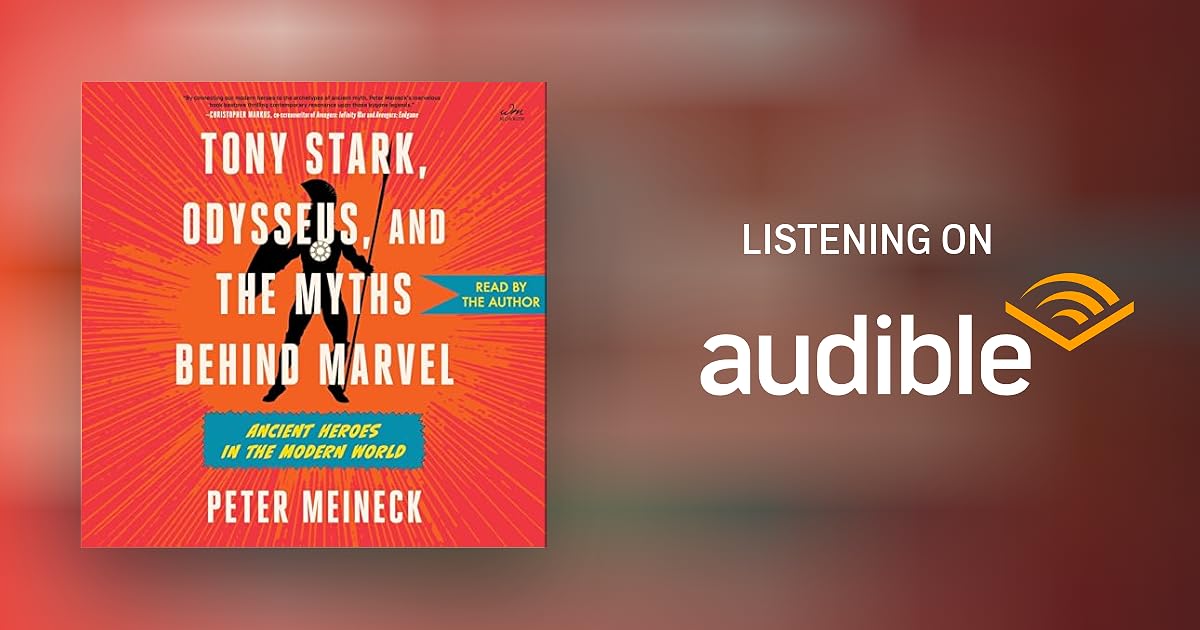
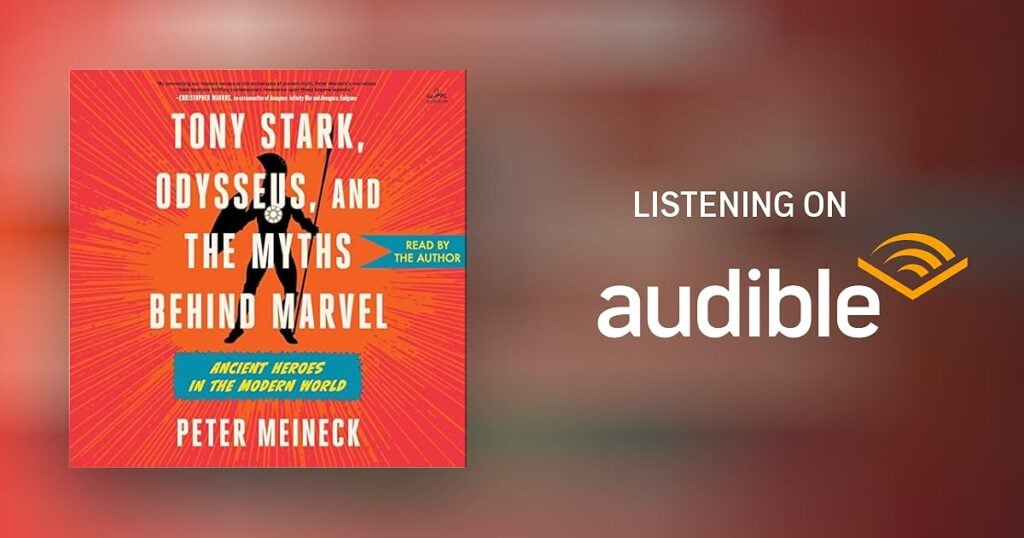
Tony Stark, Odysseus, and the Myths Behind Marvel by Peter Meineck is a fascinating study of how modern superhero stories continue the traditions of ancient mythology. The book argues that Marvel heroes are not simply comic-book characters created for entertainment. Instead, they are modern mythological figures who carry the same themes, archetypes, and emotional struggles found in the legends of ancient Greece.
Peter Meineck, a classical scholar and theater director, explains that stories about superheroes fulfill many of the same cultural functions that myths once served in ancient civilizations. Greek myths explored courage, suffering, fate, identity, revenge, sacrifice, and the dangers of pride. Marvel stories do the same thing, but through characters such as Iron Man, Spider-Man, Black Panther, Scarlet Witch, Wolverine, Thor, and Captain America.
The central idea of the book is that ancient mythology never disappeared. It simply evolved into modern popular culture. Today, instead of hearing stories about Achilles or Odysseus around a fire, audiences watch Marvel films and read superhero comics. The names and settings may have changed, but the core themes remain remarkably similar.
Tony Stark and Odysseus: The Clever Hero
The title of the book immediately introduces one of Meineck’s most important comparisons: Tony Stark and Odysseus.
In Homer’s Odyssey, Odysseus is not the strongest warrior in Greece. That role belongs to Achilles. Instead, Odysseus survives because of his intelligence, creativity, charisma, and talent for invention. He tricks enemies, devises elaborate plans, and constantly uses strategy rather than brute force.
Tony Stark follows the same mythological pattern. Like Odysseus, Stark is defined by his mind. He is an inventor, engineer, and strategist whose greatest weapon is his intellect. The Iron Man armor itself becomes a modern equivalent of the clever devices and tricks used by Odysseus during the Trojan War and his long journey home.
Both characters are also deeply flawed by pride and ego. Odysseus repeatedly causes problems because he cannot resist boasting about his achievements. One famous example occurs after he blinds the Cyclops Polyphemus and proudly reveals his identity, which leads Poseidon to curse his voyage home.
Tony Stark behaves similarly throughout Marvel stories. His confidence often borders on arrogance, and many disasters emerge from his inability to recognize his own limits. The creation of Ultron is a perfect example. Stark’s desire to protect humanity through technology accidentally creates one of the Avengers’ greatest threats.
Meineck uses this comparison to show how the “clever hero” archetype from Greek mythology survives in modern superhero storytelling.
Spider-Man and the Myth of Transformation
One of the book’s most interesting chapters connects Spider-Man to themes associated with Dionysus, the Greek god of wine, theater, transformation, masks, ecstasy, and dual identity.
Peter Parker constantly balances two identities. He is both an ordinary teenager struggling with school, relationships, and money, and also the powerful superhero Spider-Man. This duality mirrors ancient myths in which gods and heroes frequently shifted between different identities and roles.
Meineck explains that masks were extremely important in ancient Greek culture, especially in theater and religious rituals. Greek actors wore masks to transform themselves into heroes, gods, and monsters. Spider-Man’s mask continues this tradition in a modern form. Once Peter Parker puts on the mask, he becomes something larger than himself.
The book also highlights how Spider-Man’s story revolves around transformation. Peter is physically and emotionally changed after the spider bite. Like many mythological heroes, he undergoes a symbolic rebirth. His journey from awkward teenager to heroic protector resembles ancient initiation myths in which young figures are transformed through suffering and responsibility.
The famous lesson “with great power comes great responsibility” also reflects the moral teachings found in Greek mythology. Heroes who misuse their gifts often face tragedy, while true heroism comes from accepting duty and sacrifice.
Scarlet Witch and Medea: Power, Grief, and Isolation
Meineck makes another compelling comparison between Scarlet Witch and Medea, one of the most tragic and complex women in Greek mythology.
In ancient myth, Medea is a powerful sorceress whose emotions and suffering isolate her from society. Betrayal and grief push her toward destructive actions that make her both sympathetic and terrifying.
Scarlet Witch follows a similar emotional path throughout Marvel stories. Wanda Maximoff experiences devastating loss, including the deaths of her family members and Vision. Her magical powers become deeply connected to grief and emotional trauma.
The book argues that both Medea and Scarlet Witch represent fears surrounding uncontrolled emotional power. Their abilities reshape reality itself, making them dangerous not because they are evil, but because their suffering becomes overwhelming.
Meineck uses this comparison to explore how mythology has long portrayed extraordinary women as both powerful and misunderstood. Scarlet Witch continues a tradition of tragic female figures whose emotions become world-changing forces.
Black Panther and the Myth of Atlantis
The book also explores the mythology behind Black Panther and Wakanda. Meineck compares Wakanda to Atlantis, the legendary civilization described by the Greek philosopher Plato.
Atlantis was portrayed as an advanced and wealthy society hidden from the rest of the world. Wakanda functions in much the same way. It possesses technology far beyond the outside world and remains isolated in order to protect itself.
Meineck explains that both Atlantis and Wakanda symbolize humanity’s complicated relationship with progress and power. They represent ideal societies, but they also raise difficult questions. Should advanced civilizations share their knowledge with the world? Can isolation truly protect a culture forever?
These themes become central to Black Panther stories, especially in T’Challa’s struggle between preserving Wakandan traditions and opening the nation to the outside world.
The comparison also demonstrates how mythology adapts to modern concerns. Ancient Greeks used Atlantis to discuss political and moral questions about civilization. Marvel uses Wakanda to explore colonialism, global responsibility, identity, and technology.
Wolverine, Achilles, and Heracles
Among Marvel heroes, Wolverine perhaps most strongly resembles the tragic warriors of Greek myth.
Meineck compares Wolverine to Achilles because both figures are nearly unstoppable fighters driven by rage and pain. Achilles is the greatest warrior in the Iliad, but his anger repeatedly leads to destruction and suffering. Wolverine experiences a similar internal struggle. His violent instincts constantly threaten to overpower his humanity.
The book also compares Wolverine to Heracles, another legendary Greek hero associated with immense strength and tragedy. Heracles performs incredible feats, but his life is filled with suffering and uncontrollable violence. Like Wolverine, he exists between civilization and savagery.
These comparisons help explain why Wolverine remains such a compelling character. Ancient myths often focused on heroes who were powerful yet emotionally broken. Audiences are drawn to characters who struggle against darkness within themselves.
Meineck argues that Wolverine continues this ancient tradition of the wounded warrior whose greatest battle is not against monsters, but against his own nature.
Daredevil and the Blind Prophets of Greece
Daredevil receives another fascinating mythological interpretation in the book.
Matt Murdock loses his eyesight but gains extraordinary senses that allow him to perceive the world differently from ordinary people. Meineck compares him to blind prophets from Greek mythology, especially Tiresias.
In Greek myths, blindness was often associated with deeper wisdom or spiritual insight. Tiresias could not see physically, but he possessed knowledge unavailable to others. Daredevil follows the same pattern because his disability becomes connected to heightened awareness and moral understanding.
The book also connects Daredevil to themes of suffering and endurance found in Greek heroic traditions. Like many mythological heroes, Matt Murdock is defined by sacrifice and hardship. He constantly struggles between justice, vengeance, guilt, and faith.
This comparison shows how ancient storytelling traditions continue influencing the way modern heroes are written.
Captain America and the Ideal Hero
Captain America represents another important mythological archetype: the virtuous hero.
Steve Rogers resembles the honorable heroes of Greek epic poetry because he values courage, sacrifice, and loyalty above personal gain. He consistently places the needs of others before himself.
However, Meineck also explains that Captain America reflects modern values differently than ancient Greek heroes did. Greek heroes often pursued personal glory and immortality through fame. Captain America instead fights for democratic ideals, justice, and collective responsibility.
This evolution demonstrates how mythology changes over time. Modern audiences still admire heroic virtues, but those virtues are shaped by contemporary political and social beliefs.
Captain America therefore becomes a modern reinterpretation of the classical hero.
The Hulk and the Curse of Rage
Meineck also compares the Hulk to Heracles because both characters are associated with uncontrollable strength and destructive anger.
In Greek mythology, Heracles experiences episodes of madness that cause terrible tragedy. Similarly, Bruce Banner fears losing control whenever he transforms into the Hulk.
Both stories explore the fear that immense power can destroy humanity rather than protect it. The Hulk becomes a modern myth about anger, trauma, and the monster hidden inside every person.
This theme appears repeatedly throughout Greek mythology, where heroes often struggle against destructive emotions that threaten to consume them.
Marvel Heroes as Modern Gods and Legends
One of the book’s strongest arguments is that Marvel heroes function as the mythology of the modern world.
Ancient myths once helped people understand fear, war, suffering, morality, and human identity. Superhero stories now fulfill a similar role. Characters like Iron Man, Spider-Man, and Black Panther are recognized globally in the same way Achilles, Odysseus, and Heracles once were throughout the ancient Mediterranean.
Marvel films have effectively become a shared cultural mythology for modern audiences. People debate these characters, reinterpret them, and pass their stories between generations just as ancient societies did with myths.
Meineck emphasizes that myths survive because they evolve. The heroes change, but the emotional truths remain the same.
Why Greek Mythology Still Matters
Tony Stark, Odysseus, and the Myths Behind Marvel ultimately argues that ancient mythology is still alive inside modern superhero stories. Peter Meineck demonstrates that Marvel characters continue the same storytelling traditions that began thousands of years ago in ancient Greece.
Tony Stark reflects the cleverness and pride of Odysseus. Spider-Man carries themes of transformation and identity linked to Dionysian mythology. Scarlet Witch echoes Medea’s tragic emotional power. Wolverine resembles Achilles and Heracles, while Black Panther recalls Atlantis and philosophical myths about ideal civilizations.
By drawing these connections, the book reveals why Marvel stories feel so timeless and emotionally powerful. They are built upon archetypes that humanity has used for centuries to explore courage, suffering, responsibility, and hope.
In many ways, Marvel superheroes are the modern descendants of Greek heroes. The costumes and technology may be new, but the myths behind them are ancient. You can get the book here on Amazon.
Discover more from Hellenic Moon
Subscribe to get the latest posts sent to your email.