Milano Cortina Winter Olympics start, 2,802 years since the first Olympics
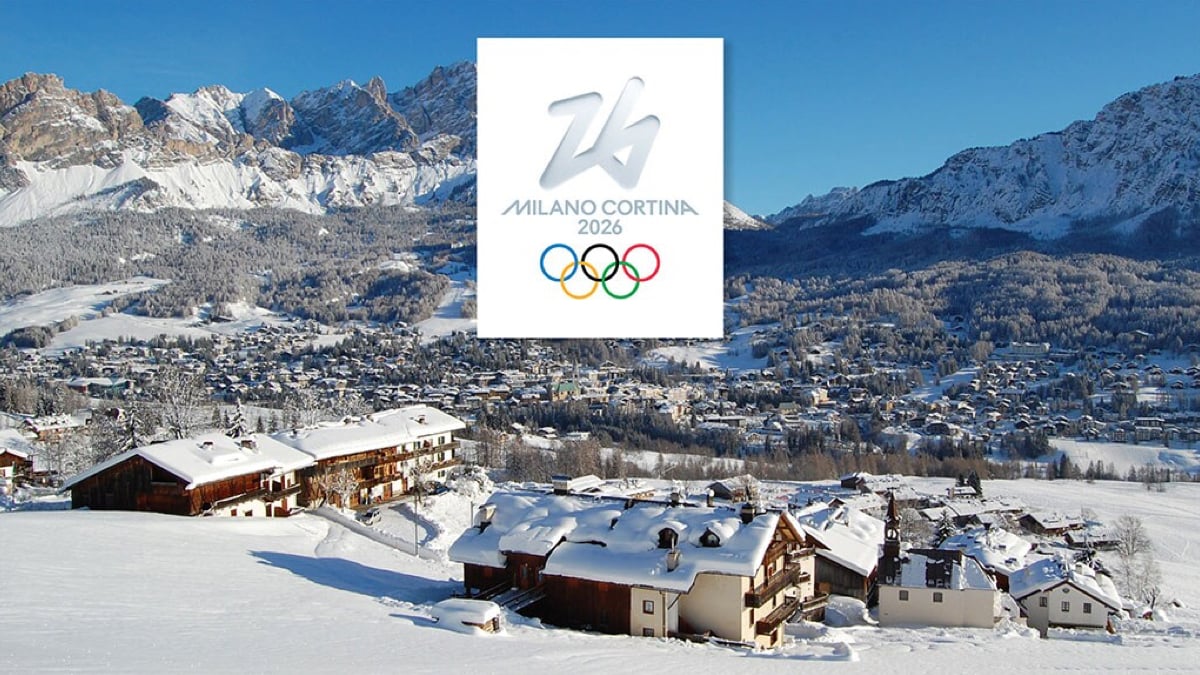
Just the other day, the Milano Cortina Winter Olympics started, as the world prepares to celebrate 2,802 years since the first official Olympics in 776BC (unofficially the games were older than that, but 776 BC is the recognized date for the first official games). The Olympics, a sports festival held in honor of Zeus, have become a worldwide event, bringing together the whole world in a united spirit of athleticism.
In Milano Cortina, the world will once again gather to celebrate athletic excellence, international unity, and the pursuit of human potential. Snow and ice will replace sun-baked stadiums, skis will take the place of javelins, and frozen slopes will echo with the cheers of modern crowds. Yet beneath the sleek modernity of alpine courses and cutting-edge arenas lies a story that stretches back nearly three millennia — to ancient Greece, to Olympia, and to the myths of gods who once raced, wrestled, and threw thunderbolts across the heavens.
The Winter Olympics may seem far removed from the dusty plains of the Peloponnese, but in spirit they are deeply rooted in the same traditions that once honored Zeus, celebrated arete (excellence), and turned athletic competition into something sacred. Milano Cortina is not merely another sporting event; it is the latest chapter in a story that began long before ice skates ever existed.
Milano Cortina: A Modern Celebration of a Timeless Ideal
The Milano Cortina 2026 Winter Olympic Games mark a defining moment in Olympic history. For the first time, the Games will be hosted across a broad geographical region, uniting the global city of Milan with the dramatic alpine landscapes of Cortina d’Ampezzo, the Dolomites, and several other northern Italian venues. This decentralized format reflects the modern Olympic movement’s evolving priorities: sustainability, cultural integration, and respect for local environments.
Italy is no stranger to the Olympics. Cortina d’Ampezzo previously hosted the 1956 Winter Olympics, while Turin hosted the 2006 Games. Milan itself is synonymous with art, fashion, design, and innovation — a fitting partner to Cortina’s majestic peaks, which seem almost mythic in their scale and beauty. Together, they embody a balance between civilization and nature that would have resonated deeply with the ancient Greeks, who saw athletic achievement as a way to harmonize body, mind, and environment.
The Birth of the Olympics in Ancient Greece
To understand the deeper meaning of Milano Cortina, we must return to Olympia, a sanctuary nestled in the western Peloponnese. According to tradition, the ancient Olympic Games began in 776 BCE, though their origins were likely earlier and steeped in myth.
The Games were held in honor of Zeus, king of the gods, whose colossal statue at Olympia — crafted by the sculptor Phidias — was considered one of the Seven Wonders of the Ancient World. Every four years, Greek city-states would set aside warfare under a sacred truce known as the ekecheiria, allowing athletes and spectators safe passage to the Games. This idea — that sport could transcend politics and conflict — remains one of the most powerful legacies of ancient Greece.
Athletes competed not for money, but for kleos (glory) and timē (honor). Victors received a simple olive wreath, yet their names were immortalized in poetry, sculpture, and civic pride. The ancient Olympics were not entertainment in the modern sense; they were a religious festival, a test of excellence, and a celebration of humanity’s closeness to the divine.
Mythological Foundations: Gods, Heroes, and Athletic Rivalries
Greek mythology does not merely frame the Olympics — it explains them. One legend claims that Heracles (Hercules) founded the Olympic Games after completing his Twelve Labors, establishing contests to honor Zeus. Another tells of Pelops, who won a chariot race against King Oenomaus to claim the hand of Hippodamia, a myth that directly links competition, risk, and divine favor.
The gods themselves were imagined as athletes.
- Hermes, swift-footed messenger of Olympus, embodied speed and agility.
- Apollo represented balance, harmony, and disciplined physical perfection.
- Ares symbolized raw force, while Athena stood for strategic mastery and controlled power.
These divine archetypes still echo through modern sport. When alpine skiers hurtle down icy slopes or speed skaters carve perfect arcs across frozen tracks, they unconsciously reenact the ancient Greek belief that athletic excellence is a reflection of cosmic order.
From Ancient Olympia to the Modern Olympic Movement
The ancient Olympic Games were abolished in 393 CE by the Roman emperor Theodosius I, who sought to suppress pagan practices. For more than 1,500 years, the Olympic flame went dark. Yet the ideals behind the Games never truly vanished.
In the late 19th century, Pierre de Coubertin, a French educator and historian, sought to revive the Olympics as a means of promoting physical education, international peace, and moral development. Inspired by ancient Greece, he founded the International Olympic Committee (IOC) in 1894, leading to the first modern Olympic Games in Athens in 1896 — a symbolic return to the birthplace of the ancient tradition.
Although the modern Olympics are secular, their symbolism is unmistakably Greek. The flame is still lit in Olympia. The motto — Citius, Altius, Fortius (Faster, Higher, Stronger) — reflects the Greek obsession with self-transcendence. Even the idea of the athlete as a role model draws directly from ancient heroic ideals.
The Rise of the Winter Olympics
While the ancient Greeks never competed on ice or snow — the Mediterranean climate offered no such conditions — they would have immediately understood the philosophy of winter sport.
The Winter Olympics were officially inaugurated in 1924 in Chamonix, France, though they were initially called the “International Winter Sports Week.” Events such as skiing, skating, and bobsleigh were recognized as expressions of the same athletic spirit as track and wrestling — human beings challenging nature, gravity, and their own limits.
Just as ancient Greek athletes trained in gymnasia to prepare for scorching summers, winter athletes adapt their bodies to extreme cold, altitude, and speed. The environment changes, but the core concept remains unchanged: arete, the pursuit of excellence.
Ice, Snow, and Greek Ideals
Although Greek mythology is often associated with sun, sea, and stone, it contains striking parallels to winter sport. Mountains were sacred places in Greek thought — none more so than Mount Olympus, whose snow-capped peaks were believed to be the home of the gods. The Dolomites surrounding Cortina, rising sharply and dramatically above the clouds, evoke a similar sense of divine presence.
Moreover, Greek myth often emphasizes struggle against natural forces. Heroes endure harsh landscapes, freezing winds, and impossible odds. The discipline required of a biathlete or downhill skier mirrors the trials of heroes like Odysseus, whose long journey demanded endurance, adaptability, and resilience.
In this sense, the Winter Olympics are not an aberration of Greek ideals, but their expansion — proof that the ancient philosophy of athletic excellence can flourish in any climate.
Milano Cortina and the Olympic Truce
One of the most profound Greek contributions to the Olympics is the concept of the sacred truce. While modern Games cannot halt all conflicts, the idea that nations can compete without war remains central to the Olympic ethos.
Milano Cortina arrives at a moment when this ideal feels especially significant. Athletes from across the globe — from superpowers to small nations — will stand together in shared ritual. Flags will be raised, anthems played, and for a brief moment, the world will resemble the ancient Greek vision of peaceful rivalry.
Italy, a country layered with Roman, Renaissance, and classical heritage, becomes an ideal steward of this tradition. Milan’s modernity and Cortina’s natural beauty echo the duality that defined ancient Greek culture: innovation balanced by reverence for the past.
The Olympic Flame: A Greek Ritual in a Winter World
No image ties ancient Greece to modern sport more powerfully than the Olympic flame. Before Milano Cortina, the torch will be lit in Olympia using sunlight and ritual choreography derived from ancient practices. This fire — symbolizing purity, continuity, and divine presence — will travel across Europe before reaching Italy.
Even amid ice and snow, the flame burns, reminding us that the Olympics are not bound by climate or geography. They are bound by myth, memory, and the human drive to test limits.
A Living Myth in the Alps
The Milano Cortina Winter Olympics are not just about medals, records, or spectacle. They are about continuity — the unbroken thread connecting modern athletes to ancient runners, wrestlers, and charioteers who once competed under the gaze of Zeus.
When a skier launches off a ridge at impossible speed, when a figure skater spins with near-supernatural grace, when a snowboarder defies gravity itself, we are witnessing a modern retelling of ancient myths. These athletes become temporary heroes, their feats narrated, shared, and remembered — just as Homer once sang of Achilles and Odysseus.
In that sense, Milano Cortina is not merely hosting the Winter Olympics. It is hosting a living myth, reborn in ice and snow, but still animated by the same Greek ideals that shaped the very idea of sport.
Olympics: The Eternal Games
From Olympia’s dusty track to Cortina’s icy slopes, the Olympics have always been about more than competition. They are about humanity’s desire to touch the divine through effort, discipline, and courage.
The Milano Cortina Winter Olympics stand at the intersection of past and present, myth and modernity. Though winter sport was unknown to ancient Greece, its spirit is unmistakably Greek. Excellence, honor, ritual, and the belief that sport can bring people together — these are gifts from antiquity that continue to define the Games.
As the Olympic flame burns against the alpine night, it carries with it the memory of Mount Olympus itself — a reminder that, whether under the Mediterranean sun or amid Alpine snow, the Games remain eternal. Visit the official website of Milano Cortina for more. You might also enjoy our old blog post about the 2,800 year anniversary of the Olympics.
Discover more from Hellenic Moon
Subscribe to get the latest posts sent to your email.