Greek mythology in Stranger Things
Since its debut in 2016, Stranger Things has been praised for its blend of 1980s nostalgia, heartfelt character storytelling, and imaginative supernatural horror. Yet beneath the pop-culture references, Dungeons & Dragons terminology, and Spielbergian aesthetics lies another, deeper layer of influence: a structural and symbolic dialogue with Greek mythology. Whether intentional or organic, the parallels are striking. The mythic archetypes found throughout the series—from journeys to the underworld to heroic tests, monstrous adversaries, prophetic visions, and tragic sacrifices—resemble the enduring storytelling grammar of ancient Greece.
This article examines Stranger Things through a Greek-mythological lens, uncovering resonances with classical myths that enrich its narrative and deepen its emotional power. These influences do not rely on the series naming Greek figures outright; instead, they arise through shared motifs, structural similarities, and universal patterns of mythic storytelling.
Soteria: Goddess of Safety
Lets start with the most clear reference to Greek mythology in Stranger Things. In the show a device called Soteria is implanted into the neck of Henry Creel (Vecna/001), because it limits his psychic abilities. Soteria was the Greek goddess of safety, salvation, deliverance and preservation from harm.
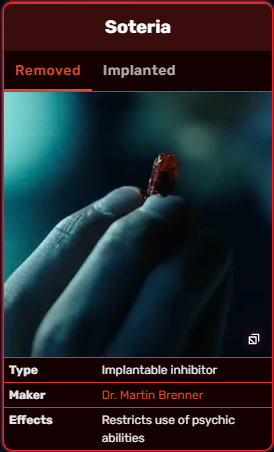
Soteria is the most clear and obvious example of Greek mythology in Stranger Things. The rest of this article will explore some interesting similarities to Greek myths in the show, without claiming that all the links are intentional. But it can be fun to see some parallels.
The Upside Down and the Greek Underworld: A Modern Katabasis
One of the strongest mythological parallels in Stranger Things is the recurring theme of katabasis, the descent into the underworld. Ancient Greek heroes—Orpheus, Heracles, Theseus, Odysseus—made perilous journeys into realms of death to save loved ones, acquire knowledge, or confront monstrous evil. These journeys were tests of courage, loyalty, and human spirit.
In Stranger Things, the Upside Down functions as a modern underworld, mirroring these mythic descents.
Will Byers as Persephone / Orpheus’ Eurydice
From the very beginning of the series, Will Byers becomes a central “lost soul,” abducted into another world beyond mortal reach. His mother Joyce and his friends embark on a desperate quest to rescue him—directly paralleling the stories of:
- Demeter searching for Persephone—a mother driven beyond sanity by the loss of her child
- Orpheus descending to rescue Eurydice—a journey powered by love, belief, and grief
- Theseus entering the labyrinth—facing an overwhelming monster in a place designed to disorient and kill
Joyce’s frantic determination is particularly evocative of Demeter’s mythic despair. She even communicates with Will across dimensional boundaries, reminiscent of the faint communications between worlds common in Greek depictions of the underworld.
Hopper’s Descent for Will and Eleven
Chief Hopper repeatedly takes on the role of a Greek hero descending into Hades. His willingness to walk into Vecna’s domain to protect Eleven, and even sacrifice himself, echoes:
- Heracles, who enters Hades as part of his labors
- Theseus, who descends to help a friend
- Odysseus, who travels to learn truth and future prophecy
Hopper’s journeys are not episodic adventures—they transform him. Like Greek heroes returning from the underworld, he comes back scarred, wiser, and with greater clarity about what matters.
Season 4’s Journey into Max’s Mind
When the group descends into Max’s mental landscape to rescue her from Vecna, the imagery resembles both the caverns of Hades and the dreamlike afterlife realms found in Homer’s Odyssey and Plato’s descriptions of the soul’s journey.
Max’s suspended body, trapped between life and death, recalls the tenuous liminal state between the world of the living and the dead—a hallmark of Greek myth.
Eleven as a Modern Demigod: Echoes of Hercules, Perseus, and Athena
Eleven is perhaps the clearest embodiment of Greek mythological influence. She is, structurally, written as a demigod—a being with immense power, but human vulnerability, thrown into a world that fears and misunderstands her.
Heracles and the Burden of Power
Heracles’ immense strength made him a hero but also a danger, especially in childhood. Similarly:
- Eleven struggles to control her abilities
- Her “labors” often involve confronting monsters unknown to the world
- She is pushed into heroic challenges by forces outside her control
Like Heracles—who was both weaponized and worshiped—Eleven often wrestles with whether her power is a gift or a curse.
Perseus and the Hero Against Monsters
Perseus fought monstrous beings like Medusa and sea creatures using tools, strategy, and special abilities. Eleven:
- Battles the Demogorgon, Demodogs, and Vecna
- Uses unique gifts to freeze or kill monsters
- Often faces monsters born from a “dark reflection” world
Her climactic confrontation with Vecna in Season 4 feels particularly Persean—especially the idea of facing a creature whose power lies in sight, illusion, and psychological dominance.
Athena and the Power of the Mind
Eleven’s psychic abilities echo Athena’s dominion over intellect, strategy, and mental prowess. Athena was not simply strong; she was wise, strategic, and symbolically tied to rationality and internal clarity.
Eleven’s battles are not purely physical—they are battles of will, fought in mental landscapes, echoing the dreamlike internal battlefields where gods often clashed in myth.
Vecna as a Greek Monster Archetype: Titan, Minotaur, and Hades in One
While Vecna’s D&D roots are obvious, his depiction in Stranger Things also mirrors classical Greek monstrosity and divine antagonism.
Vecna as a Titan
TItans were primordial beings exiled for their destructive ambitions. Vecna:
- Was banished from Hawkins Lab into another dimension
- Grew in power in a realm of chaos
- Seeks dominion over the world he believes wronged him
His cosmic scale and hunger for reshaping reality evoke figures like Cronus, whose rage and ambition drove him to challenge the gods themselves.
Vecna as the Minotaur
Vecna’s lair—a dark, twisting, nightmarish realm that ensnares victims—resembles the Labyrinth. His method of killing (psychological torment leading to physical destruction) echoes the Minotaur, who consumed youths sent into a maze.
Like the Minotaur myth:
- A corrupted creation hides in a labyrinth-like otherworld
- Innocent victims are trapped inside
- Heroes must navigate confusing passages to confront the beast
Season 4’s “mind palace” sequences make this parallel even clearer, transforming Max, Eleven, and Vecna’s mental spaces into metaphorical labyrinths.
Vecna as a God of the Underworld
Though not a perfect analogue for Hades, Vecna shares attributes with Greek underworld rulers:
- He collects souls, trapping consciousness in eternal torment
- He creates unmoving, corpse-like bodies in the real world
- He rules a realm of death, decay, and memory
His connection to mental suffering resembles the darker corners of Tartarus, where souls were punished through illusions and psychological torment rather than physical suffering.
The Party as the Greek Heroic Band: Argonauts and the Odyssey’s Crew
The main characters of Stranger Things—Mike, Lucas, Dustin, Will, Eleven, Max—function as a mythic heroic fellowship, similar to the Argonauts or Odysseus’s companions.
A Journey Defined by Friendship
Just as Jason required diverse skills from his companions to obtain the Golden Fleece, the Hawkins kids rely on each other’s talents:
- Dustin’s intelligence
- Lucas’s courage
- Mike’s leadership
- Will’s sensitivity and otherworldly connection
- Eleven’s supernatural power
This symphony of abilities mirrors Greek heroic groups more than the solitary hero model of other mythologies.
Trials Across Seasons
Like Greek sagas, the party’s journey is episodic but continuous:
- Season 1: Katabasis (rescue of Will)
- Season 2: Hybrid exorcism / contagion myth (the Mind Flayer and Will’s possession)
- Season 3: Monstrous convergence (the literal, many-bodied creature reminiscent of Greek chimeras)
- Season 4: Psychological trials (Vecna as a Minos-like tormentor)
This episodic adventure structure is quintessentially Homeric.
Max Mayfield as the Tragic Heroine: Echoes of Iphigenia and Cassandra
Max’s storyline in Season 4 provides one of the series’ richest mythological parallels.
Cassandra: The One Who Sees Doom
Cassandra, cursed to foresee disaster yet never be believed, parallels Max’s recognition of Vecna’s looming threat. Her visions, nightmares, and sense of inescapable fate evoke the Greek concept of moira—a destiny that even heroes cannot fully evade.
Iphigenia: The Sacrificial Innocent
Max becomes the target of Vecna’s ritualistic killings—victims chosen for their deep emotional wounds. This parallels myths in which young women were selected as sacrificial offerings to appease gods or monsters.
Her near-sacrifice in “Dear Billy” is staged like a mythic drama:
- A terrified heroine
- A supernatural force demanding her life
- A last-moment rescue
- Yet destiny ultimately catching up in the finale
Max’s storyline is one of the clearest examples of Greek-tragic structure in the entire show.
Prophecy, Fate, and Hubris: Greek Themes at the Heart of the Stranger Things
Stranger Things explores themes that lie at the core of Greek mythology.
Prophecy and Visions
Dreams, visions, and psychic warnings guide characters repeatedly, echoing:
- The prophetic dreams of Agamemnon
- The visions granted to seers like Tiresias
- The oracles that shaped heroic destinies
Season 4 especially leans into this, with Vecna’s “visions” acting as dark oracular warnings.
Hubris and Its Consequences
Greek tragedies often revolve around hubris, the fatal arrogance that blinds characters to danger. Multiple authority figures in Stranger Things embody this:
- Dr. Brenner’s belief he can control supernatural power
- The military’s conviction that brute force will solve the problem
- Hawkins Lab thinking it can contain breaches between worlds
Their arrogance leads, as in Greek myth, to ruin.
Sacrifice as a Path to Heroism
Greek heroes frequently embrace sacrifice—voluntary or imposed—as part of their destiny. Stranger Things mirrors this:
- Hopper in the explosion at the Gate
- Billy sacrificing himself against the Mind Flayer
- Eleven repeatedly risking her life for her friends
- Max becoming an unintended martyr of Vecna’s plan
These sacrifices reflect the Greek belief that heroism demands suffering, often without guaranteed reward.
Hawkins as a Greek Polis Under Siege
Greek myths often depict city-states protected (or cursed) by the actions of gods, heroes, and monsters. Hawkins evolves into a kind of mythic polis, symbolically besieged by a supernatural threat that only a select few understand.
Like Thebes in the Oedipus myth or Troy in the Iliad:
- Ordinary people misinterpret signs (Satanic Panic, conspiracy theories)
- Authorities often fail or worsen the crisis
- A small group of chosen individuals holds the knowledge needed to save the city
The repeated cycles of danger and salvation mirror the mythic rhythms of a city bound to supernatural destiny.
Conclusion: Why Greek Myth Makes Stranger Things Feel Timeless
Even if the Duffer Brothers never consciously set out to build Stranger Things on Greek myth, the parallels demonstrate how deeply mythic structures are embedded in storytelling. Greek mythology offers universal templates:
- The descent into the underworld
- The rise of monstrous antagonists born from cosmic injustice
- The tragic hero marked by fate
- The band of companions who triumph together
- The godlike child who must choose her own humanity
- The hubris of mortals who try to exceed their limits
- A world on the brink of destruction saved by sacrifice
These archetypes echo across centuries, and Stranger Things—though wrapped in 1980s nostalgia and supernatural adventure—taps into these timeless patterns.
This is why the series feels both familiar and mythic. Its battles resemble ancient epics; its characters walk the path of heroes and tragic figures; its monsters echo the creatures Greek storytellers once imagined lurking beneath the world.
In channeling these mythological structures, Stranger Things becomes more than a nostalgic sci-fi series—it becomes a modern myth of its own. Visit the official Netflix page of the series for more.
Discover more from Hellenic Moon
Subscribe to get the latest posts sent to your email.