God of War: Sons of Sparta — A New Chapter in an Epic Saga
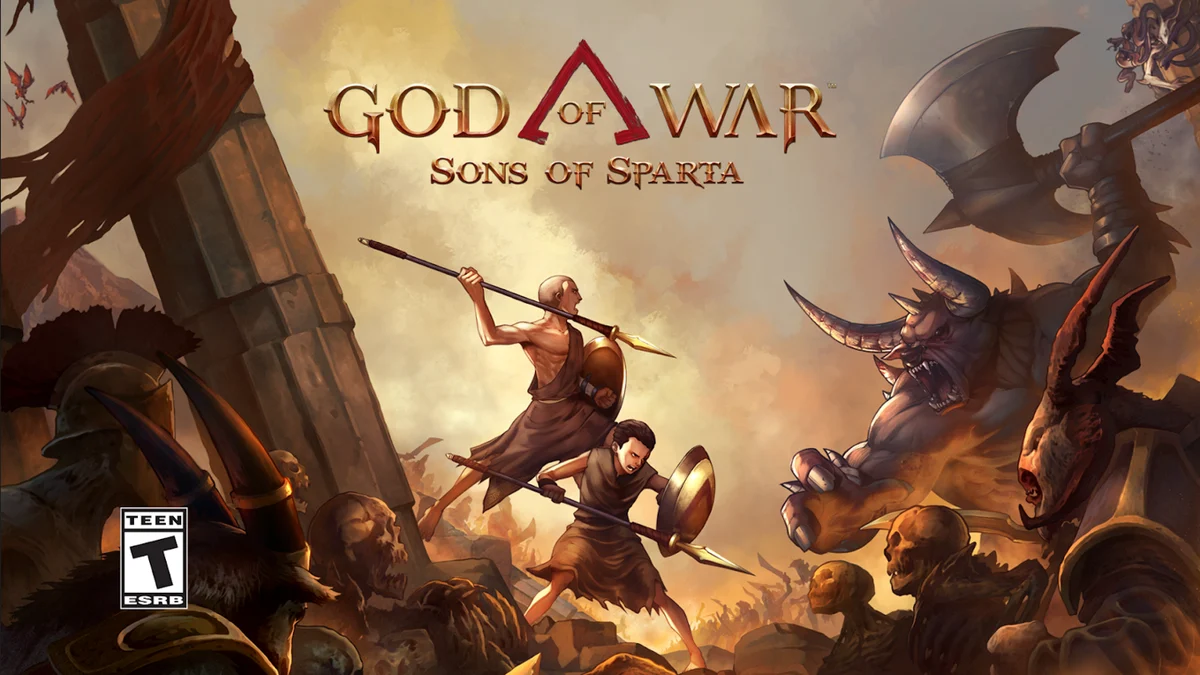
Released on February 12, 2026, God of War: Sons of Sparta is the 10th official entry in the God of War franchise. It’s a 2D Metroidvania-style action-adventure game developed jointly by Mega Cat Studios and Sony’s Santa Monica Studio, and published by Sony Interactive Entertainment exclusively for the PlayStation 5. Chronologically, it is the earliest story ever told in the God of War universe — taking place before all other games, in the earliest years of Kratos’ life.
Premise and Setting
In Sons of Sparta, players experience a youthful Kratos, aged about 13, undergoing the infamous Spartan Agoge training alongside his younger brother, Deimos. When a comrade fails to return home, the brothers set out across Laconia on a quest that leads to mythic battles, encounters with fearsome creatures, and hints of a deeper threat looming over Spartan society. The story is narrated by an older Kratos, voiced by TC Carson, speaking to his daughter Calliope — a framing device that ties this prequel directly to established characters and themes from earlier games.
Unlike the mainline God of War games that followed high-budget 3D action with cinematic production, Sons of Sparta embraces retro-style pixel art and side-scrolling gameplay, blending modern storytelling with classic format inspirations. The combat system centers on the spear and shield, and introduces Gifts of Olympus, divine artifacts that grant Kratos mythic powers and tactical abilities as he grows stronger.
A Brief History of the God of War Franchise
To appreciate Sons of Sparta, it helps to understand the long arc of the God of War franchise — one of Sony’s most iconic and enduring series.
Origins and Greek Mythology Era (2005–2013)
The franchise began in 2005 with the original God of War (for PlayStation 2), created by David Jaffe and developed by Santa Monica Studio. It introduced players to Kratos, a Spartan warrior haunted by visions of his murdered family. Manipulated by the Greek gods, Kratos embarks on a brutal quest for revenge against Ares, the Greek God of War, and becomes entangled with the wider pantheon — fighting gods, titans, and mythic beasts along the way.
This first title established key elements that would define the franchise:
- A bold fusion of third-person action, hack-and-slash combat, puzzles, and expansive mythic environments.
- A reinterpretation of Greek mythology where legendary figures are woven into Kratos’ increasingly personal and tragic story.
- Themes of rage, vengeance, fate, and the futility of serving the gods.
The Greek mythology era continued with several notable entries:
- God of War II (2007) — expanded Kratos’ vendetta against the gods and Titans.
- God of War III (2010) — brought the original trilogy to a dramatic conclusion.
- Chains of Olympus (2008) and Ghost of Sparta (2010) — handheld titles that explored new pieces of Kratos’ backstory.
- God of War: Ascension (2013) — a prequel that delved into earlier moments of Kratos’ life and his initial ties to the gods.
These games drew deeply on Greek mythological sources — not for strict historical accuracy, but as a mythic framework for Kratos’ personal journey. Titans, gods, the Underworld, legendary beasts, and heroic myths were re-imagined in a high-fantasy narrative that emphasized spectacle and emotional intensity.
Norse Era (2018–2022)
In a bold creative shift, the franchise was rebooted in 2018 with God of War, moving away from Greek mythology to embrace Norse mythology. In this story, Kratos, now older and burdened by his past, lives in the realms of the Norse gods and must journey with his son Atreus to fulfill a promise to his late wife.
This reboot was a massive critical and commercial success — praised for its narrative depth, emotional resonance, and reinvention of iconic characters within a rich mythological world. It also reinvigorated interest in the franchise and expanded its audience far beyond earlier entries.
Its follow-up, God of War Ragnarök (2022), continued the Norse saga and explored heavier themes of fatherhood, destiny, and the cyclical nature of myths themselves — further solidifying God of War’s place as one of the most beloved video-game narratives of its generation.
Greek Mythology and the Franchise Narrative
One of the God of War series’ most defining features is how it adapts and re-interprets Greek mythology into its fictional universe.
Kratos and Mythic Themes
Kratos himself does not appear in classical Greek myth — he is an original character created for the franchise. However, his story intersects with many iconic mythological figures:
- Ares, the original God of War, is the catalyst for Kratos’ tragic journey.
- Athena, goddess of wisdom and war, acts as both ally and manipulator.
- Zeus, king of the gods, becomes Kratos’ greatest adversary.
- Titans like Cronos and mythic creatures like Hydras, Minotaurs, and Medusae are drawn from the Greek mythic corpus.
The games take liberties with myth — often dramatically reinventing characters or situations — but this aligns with how myths have historically evolved through retellings. God of War uses these ancient motifs not as strict adaptations but as tools to explore power, vengeance, tragedy, and the human condition in a mythic setting.
Mythology in Sons of Sparta
Sons of Sparta returns the series to its Greek mythological roots after years steeped in Norse lore. The world of Laconia, Spartan law, and mythic combat are at the heart of the new game — but seen through the lens of younger Kratos and early Spartan society.
The inclusion of iconic creatures such as Minotaurs and Satyrs, along with new foes inspired by lesser-used mythic tales, reflects a broader exploration of the rich tapestry of Greek myth. While the game’s pixel-art style and retro gameplay set it apart visually, its narrative purpose is to deepen understanding of Kratos’ origins — both as a warrior shaped by Spartan discipline and as a character haunted by destiny.
Gameplay and Execution: What Sets Sons of Sparta Apart
Compared with previous God of War titles, Sons of Sparta is both familiar and radically different:
What’s New
- 2D Metroidvania style: Unlike the signature 3D action of past games, this entry uses side-scrolling exploration, environmental puzzles, and pixel art visuals.
- Combat system adapted: Kratos fights using his spear and shield, learning new abilities and artifacts inspired by mythic lore.
- Narrative focus on youth and brotherhood: The story centers on formative relationships and emotional stakes younger Kratos faces before he becomes the infamous Ghost of Sparta.
Critical Reception
Despite its ambition, Sons of Sparta has had a divided reception. Early Metacritic scores place it as one of the less acclaimed entries in the franchise, criticized for clunky combat, visuals that don’t match the quality expected from recent AAA titles, and a tone that feels less intense than mainline God of War games.
Even David Jaffe, the original creator of God of War, publicly described the game as “not God of War,” criticizing its narrative and portrayal of Kratos as a child.
These reactions reflect how Sons of Sparta challenges franchise expectations — a game that is simultaneously celebrated for creativity and questioned for divergence from the series’ core experience.
Legacy, Context, and Future Paths
Sons of Sparta arrives at a milestone — Sony is also planning a remake of the original Greek trilogy, bringing classic entries into modern technical form.
This positioning suggests Sons of Sparta plays two roles:
- A celebration of Greek myth roots, reintroducing fans to the world that made God of War a phenomenon.
- A bridge to the franchise’s past and future, tying youthful Kratos’ origins to the narrative threads that shaped one of gaming’s most compelling characters.
While the franchise has already explored Norse mythology deeply, the door is now open for further mythological settings — including speculation about Egyptian mythology or beyond — expanding the thematic potential of Kratos’ world even further.
Sons of Sparta
God of War: Sons of Sparta is a bold departure and a deep homage — a retro-styled prequel that delves into Kratos’ earliest trials, re-engaging the franchise with its Greek mythological roots. While its style and reception may be controversial, its ambition underscores what the God of War series has always been about: reimagining ancient myths through the lens of personal struggle, epic battles, and timeless storytelling.
Whether future games continue to explore classic mythologies, return to 3D action, or chart entirely new terrain, Sons of Sparta from Santa Monica Studio reminds us that even legendary warriors have beginnings — and that myth, like games themselves, evolves with every telling.
Discover more from Hellenic Moon
Subscribe to get the latest posts sent to your email.