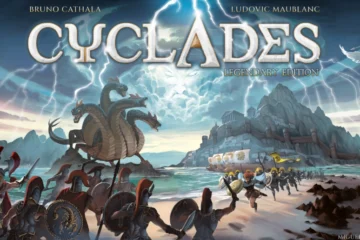
Cyclades Maelstrom expansion out now for Legendary Edition!
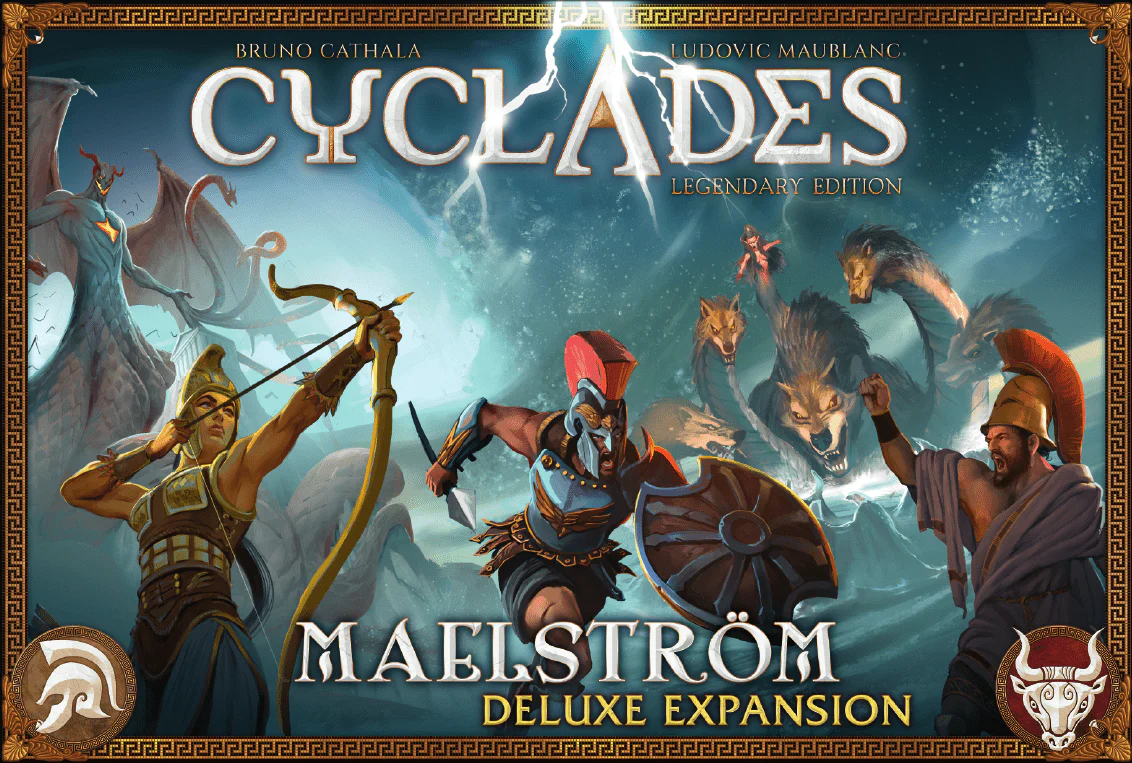
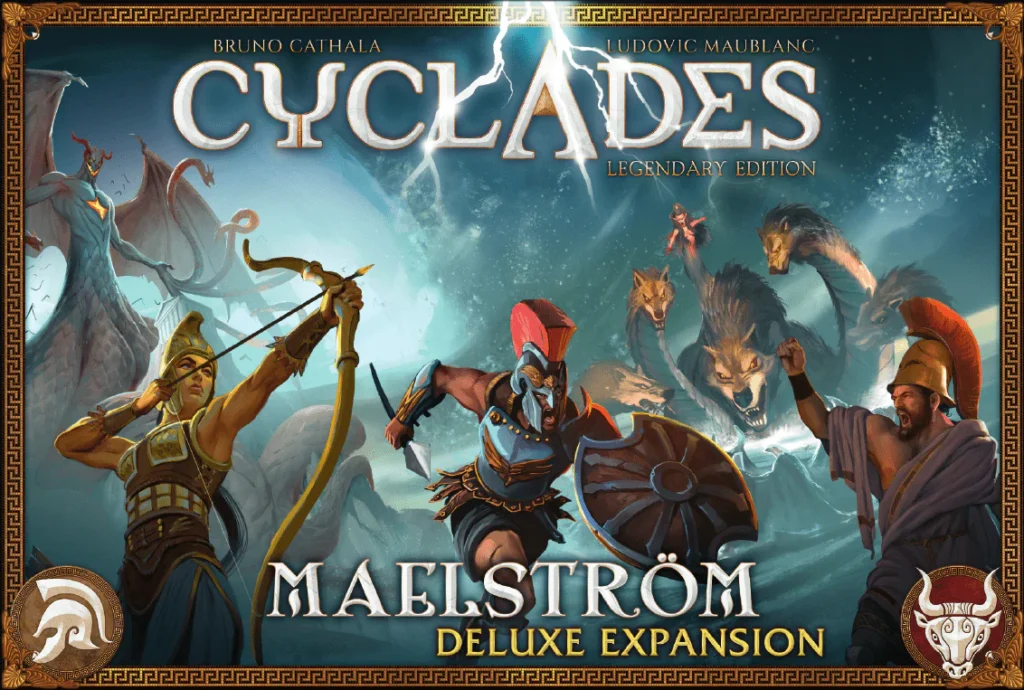
The Cyclades: Maelstrom expansion, which came out earlier this week, is one of the newest additions to the acclaimed Cyclades board game system, a series already deeply rooted in the world of Ancient Greek mythology. Designed by Bruno Cathala and Ludovic Maublanc at Open Sesame Games, this expansion builds upon the mythological foundation of the base game by introducing new heroes, monsters, and narrative tensions drawn from some of the most dramatic and chaotic elements of Greek myth: the sea, primordial creatures, and legendary champions.
What makes Maelstrom particularly compelling is not just its added mechanics, but how it intensifies the mythological atmosphere of the game. It does this by focusing on the idea of a world thrown into upheaval—a recurring theme in Greek mythology—where gods, monsters, and mortals clash amid unpredictable natural forces.
The Cyclades Setting: A Mythological Playground
Before diving into Maelstrom, it is important to understand the mythological framework of Cyclades itself. The base game is set in the Cyclades islands, a real-world archipelago in the Aegean Sea that was central to ancient Greek civilization. In the game, players act as rival city-states seeking dominance, invoking gods like Zeus, Athena, and Poseidon to gain advantages.
Greek mythology is not just a theme here—it is the core engine of the game. Players bid for the favor of gods, summon mythological creatures, and build metropolises, all of which mirror the mythic worldview of ancient Greece, where divine favor and heroic action shaped human destiny. Visit our old blog post about how on YouTube board game specialist website considers Cyclades: Legendary Edition to be the best board game of all time.
The Maelstrom expansion for Cyclades: Legendary Edition takes this already rich setting and pushes it toward a more chaotic, dramatic interpretation of myth.
What Is the Maelstrom Expansion?
Cyclades: Maelstrom is a modular expansion designed for 2–6 players that adds new layers of strategy and mythological content. It introduces:
- New heroes
- New mythological creatures
- Additional metropolis tokens
- Increased variability and unpredictability in gameplay
The expansion emphasizes volatility and adaptation, reflecting the dangerous and ever-changing nature of the mythological seas.
At its narrative core, Maelstrom revolves around powerful forces rising from the depths of the sea to challenge human civilization.
The Central Mythological Conflict
The expansion’s story is driven by a classic Greek mythological motif: the uprising of primordial and monstrous forces against the established order.
Typhon: The Father of Monsters
One of the most important figures introduced in Maelstrom is Typhon.
In Greek mythology, Typhon is one of the most fearsome creatures ever conceived. He is often described as:
- A gigantic, serpentine monster
- The offspring of Gaia (Earth) and Tartarus (the abyss)
- The father of many legendary monsters, including Cerberus, the Hydra, and the Chimera
Typhon’s most famous myth involves his battle against Zeus, where he nearly overthrows the king of the gods. This story represents chaos challenging cosmic order—a theme that resonates strongly in Maelstrom.
In the expansion, Typhon symbolizes an existential threat. His presence evokes the idea that even the most powerful civilizations (the players’ metropolises) are fragile when confronted with primordial forces.
The Nereids: Enchanting and Deadly Sea Nymphs
Another key mythological addition is the Nereids.
In mythology, the Nereids are daughters of Nereus, a sea god. They are often portrayed as:
- Beautiful and benevolent sea nymphs
- Protectors of sailors
- Associated with calm seas and guidance
However, Maelstrom reinterprets them in a darker light—as “deadly nymphs with enchanting voices.”
This aligns them more closely with other dangerous mythological figures like the Sirens, whose beauty masks lethal intent. This reinterpretation reflects a broader truth about Greek mythology: the sea is both nurturing and destructive.
Heroes of Legend: The Human Response to Chaos
Against these rising threats stand some of the greatest heroes of Greek mythology:
Achilles
Achilles is one of the most iconic figures in Greek myth.
- Central hero of Homer’s Iliad
- Known for his near invincibility
- Represents martial excellence and tragic fate
In Maelstrom, Achilles embodies the ideal of the heroic warrior—fast, powerful, and decisive. His presence reinforces the importance of military strength and tactical brilliance.
Heracles (Hercules)
Heracles represents another archetype: the unstoppable force.
- Famous for his Twelve Labors
- Known for defeating monstrous creatures
- Symbolizes endurance and divine strength
Heracles is especially significant in the context of Maelstrom because he is traditionally a slayer of monsters—a direct counter to figures like Typhon.
Monsters and Mythological Ecology
One of the most fascinating aspects of Greek mythology is its interconnected “ecosystem” of monsters, many of which are descendants of Typhon.
By introducing new creature cards, Maelstrom expands this ecosystem.
In myth, monsters often serve specific symbolic roles:
- Chaos vs. order
- Nature vs. civilization
- Divine punishment vs. human ambition
In gameplay terms, these creatures act as temporary but powerful forces that can dramatically alter the balance of power. This reflects how monsters function in myth: they appear suddenly, disrupt the world, and force heroes to respond.
Metropolises and Civilization
The Maelstrom expansion also adds new Metropolis tokens, which enhance the importance of city-building.
In Greek mythology, the polis (city-state) is the center of human life and culture. Cities like Athens, Sparta, and Thebes were not just political entities but symbolic representations of order, law, and civilization.
In Maelstrom, the threat to metropolises from monsters and sea forces echoes mythological narratives where:
- Cities are destroyed by divine wrath (e.g., Troy)
- Civilizations fall due to hubris
- Human achievements are constantly tested by the gods
Mythological Themes in Gameplay
The brilliance of Cyclades: Maelstrom lies in how its mechanics reinforce mythological themes.
1. Chaos vs. Strategy
The expansion introduces more unpredictability, forcing players to adapt. This mirrors the Greek idea that:
- Fate (Moira) is unavoidable
- Even the best plans can be undone by divine intervention
2. Heroes vs. Monsters
The inclusion of heroes and creatures creates a dynamic similar to epic myths:
- Heroes rise in response to threats
- Monsters challenge the natural order
- Victory is never guaranteed
3. The Power of the Sea
Naval movement and island control are central to Cyclades, and Maelstrom amplifies this by making the sea itself more dangerous and influential.
A Darker Interpretation of Greek Mythology
Compared to earlier expansions, Maelstrom leans into the darker, more chaotic aspects of Greek mythology.
Rather than focusing on gods alone, it emphasizes:
- Primordial beings (Typhon)
- Ambiguous creatures (Nereids)
- Relentless natural forces (the sea)
This creates a tone closer to the more ancient and unsettling parts of Greek myth, where the world is not fully ordered and chaos is always waiting to return.
Mythology as Player Experience
One of the most impressive achievements of Cyclades: Maelstrom is how it allows players to experience mythology rather than just observe it.
When you play:
- Summoning a creature feels like invoking a myth
- Deploying a hero feels like entering an epic poem
- Losing a city to chaos feels like a tragic legend
This immersive quality is what sets Cyclades apart from many other strategy games.
Cyclades: Maelstrom
The Cyclades: Maelstrom expansion is more than just additional content—it is a thematic deepening of the game’s mythological identity. By introducing figures like Typhon, the Nereids, and heroes such as Achilles and Heracles, it draws on some of the most powerful and symbolic elements of Greek mythology.
Its focus on chaos, the sea, and the struggle between monsters and civilization reflects fundamental themes in ancient Greek storytelling. The expansion transforms the game into something closer to a living myth, where every decision echoes the timeless conflicts between order and disorder, heroism and destruction, humanity and the divine.
In doing so, Maelstrom captures the essence of Greek mythology: a world of beauty and terror, where the line between triumph and catastrophe is as thin—and as shifting—as the waves of the Aegean Sea.
Discover more from Hellenic Moon
Subscribe to get the latest posts sent to your email.